


 904-822-1078

How Much Do Aluminum Bi-Fold Doors Cost — and What Do Manufacturers Charge Per Panel or Per Opening?
Aluminum bi-fold doors for residential and light-commercial openings typically range from $1,800 to $3,200 per panel at trade pricing through a factory-direct source, with total opening costs landing between $9,000 and $32,000+ depending on panel count, glass specification, finish, and configuration. That wide range exists because bi-fold pricing is driven by opening square footage, thermal-break frame depth, glass unit spec, and whether a system is ordered through a dealer network or directly from the manufacturer. This guide walks contractors, builders, developers, and dealers through every cost variable — with concrete numbers, a spec comparison table, and guidance on how to access wholesale pricing.
How much are large aluminum bi-fold doors, and what drives the price?
Large aluminum bi-fold doors — those covering openings wider than 16 feet or taller than 9 feet — cost more primarily because of glass area, structural header requirements, and the increased panel count needed to fold and stack cleanly. The five core cost drivers are:
- Panel count and total width. More panels mean more frames, more hardware, and more glass. A 5-panel system at 20 ft is a meaningfully different material cost than a 3-panel system at 12 ft.
- Glass specification. Gladiator Bi-Folding Doors use 6mm glass as standard — thicker than the 5mm units found in many imported thin-frame systems. Upgrading to triple-glaze or low-E coatings adds per-panel cost but improves whole-door U-factor.
- Frame depth and thermal break. A proper thermal-break aluminum frame — where a polyamide strut separates the interior and exterior aluminum faces — costs more to extrude than a non-broken frame. It is also the reason the system qualifies for energy-efficient projects, including those under California Title 24.
- Finish. Standard anodized and powder-coat finishes (matte black, dark grey RAL 7016, white RAL 9010, bronze anodized) are priced into the base. Custom RAL colors carry an upcharge.
- Rough-opening height. Standard ceiling heights (8–10 ft) allow use of in-stock or near-stock units. Openings above 10 ft typically require made-to-order production, extending lead time and cost.
Panel width is bounded by engineering: individual bi-fold panels on aluminum systems typically range from 24 in. to 36 in. wide, with the structural sweet spot around 28–32 in. for slab stability without excessive panel weight. Specifying panels at or near standard widths keeps costs down and lead times shorter.
What is the average cost of aluminum bi-fold doors by opening width?
Opening width is the most reliable way to bracket a project budget before configuration details are finalized. The ranges below reflect factory-direct trade pricing on thermal-break aluminum systems with 6mm insulating glass, standard powder-coat finish, and low-profile flush track — no dealer markup included.
| Opening Width | Typical Panel Count | Estimated Trade Price Range | Notes |
|---|---|---|---|
| 8–10 ft | 2–3 panels | $5,500 – $8,500 | Often in-stock; fastest ship time |
| 12–14 ft | 3–4 panels | $8,500 – $13,500 | Common residential patio span |
| 16–20 ft | 4–6 panels | $13,500 – $20,000 | Requires careful header planning |
| 22–28 ft | 6–8 panels | $20,000 – $28,500 | Split-configuration or dual-track recommended |
| 30 ft+ | 8–12 panels | $28,500 – $40,000+ | Made-to-order; longer lead time |
Ranges reflect factory-direct trade pricing. Retail/dealer-network pricing typically adds 20–40% over these figures. Contact Gladiator for a project-specific quote.
Standard-size units stocked in Gladiator's Florida and California warehouses ship faster than made-to-order configurations. If your project timeline is tight, check in-stock doors ready to ship before specifying a custom size.
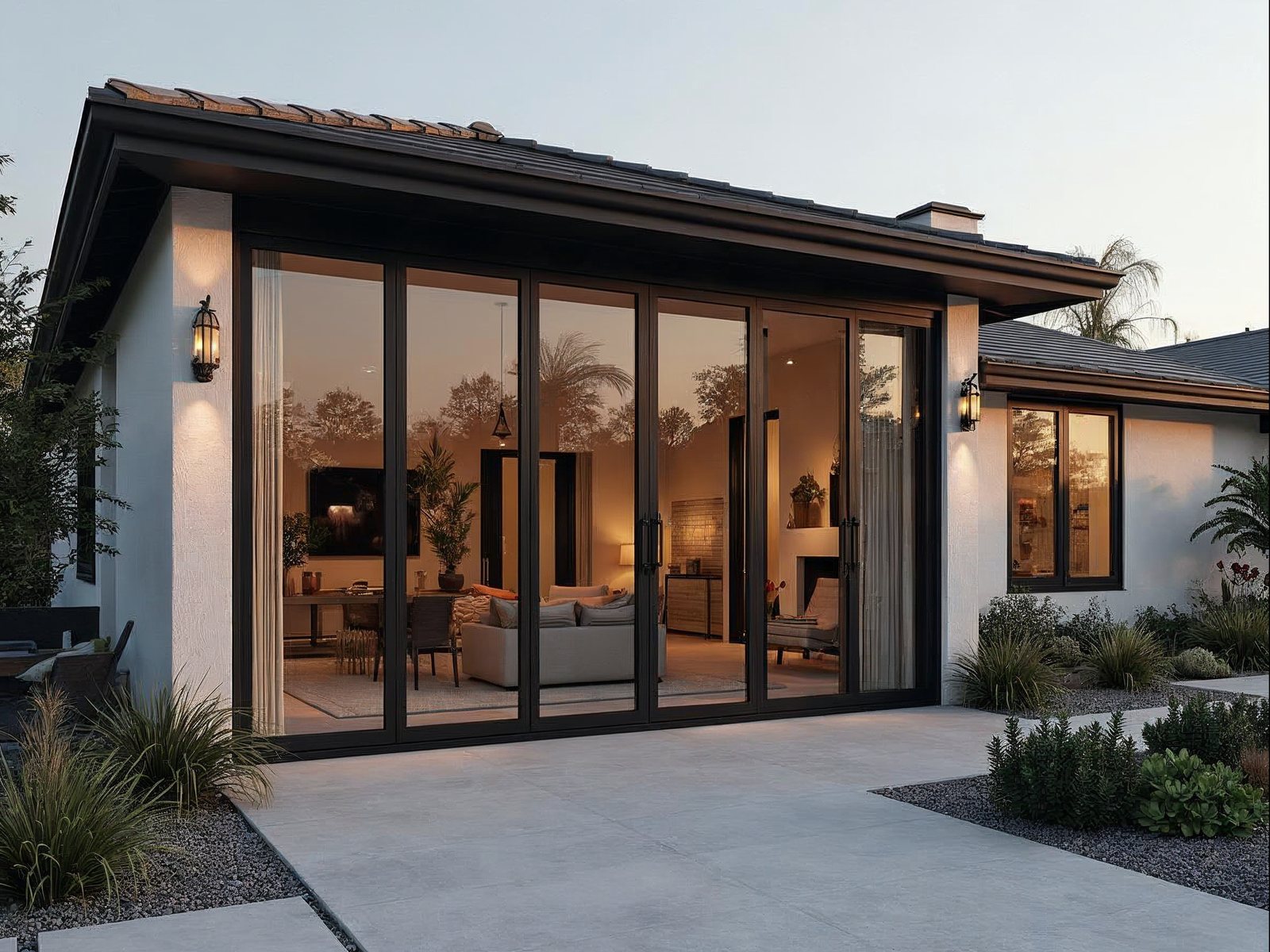
How much do aluminum folding doors cost compared to sliding glass doors?
Aluminum bi-fold doors carry a 25–45% price premium over comparably sized aluminum sliding glass doors — and that premium is justified by the folding mechanism, additional hardware per panel, and the ability to fully open an entire wall plane.
Here is how the two systems compare on cost and specification across a representative 16-foot opening:
| Attribute | Gladiator Bi-Folding Doors | Gladiator Sliding Glass Doors |
|---|---|---|
| Typical price (16 ft opening, trade) | $13,500 – $17,000 | $9,000 – $12,000 |
| Open-width achievable | Up to ~95% of rough opening | 50% of rough opening (panel stacks aside) |
| Frame material | Thermal-break aluminum | Thermal-break aluminum |
| Standard glass | 6mm insulating unit | 6mm insulating unit |
| Track profile | Low-profile flush bottom track | Low-profile flush bottom track |
| Best use case | Full indoor-outdoor wall openings | Large openings, high-traffic or narrow stack space |
| Stack space required | Panel stack at one or both ends | Panel(s) pocket or stack at one end |
| Hardware complexity | Higher (hinges, top-hung carrier, bottom guide per panel) | Lower (rollers, track per panel) |
For projects where wall clearance for stacking is limited — or where the opening is wider than 20 ft and the client does not need a fully clear aperture — Gladiator Sliding Glass Doors often represent better value. Where the design intent is a full disappearing wall, the bi-fold premium is well spent.
What is a typical bi-fold door price list from a factory-direct manufacturer?
A factory-direct price list for aluminum bi-fold doors is structured around per-panel base cost plus configuration variables — not a single MSRP. Here is how Gladiator's pricing architecture works for trade buyers:
- Base per-panel price: Covers the thermal-break aluminum frame, 6mm double-pane insulating glass unit, standard powder-coat finish, top-hung carrier hardware, and bottom guide. Standard panel widths (28–32 in.) and heights (80–96 in.) carry the lowest base price.
- Configuration upcharges: Outswing vs. inswing, panel stacking direction (left or right), and traffic door inclusion (a hinged egress panel integrated into the bi-fold run) each carry defined adders.
- Glass upgrades: Low-E coatings, argon fill, and triple-glaze units are available as line-item adders. For projects requiring compliance with California Title 24 energy standards, specifying the low-E glass upgrade is typically the most direct path to meeting whole-door U-factor requirements.
- Finish upcharges: Standard finishes (matte black, white RAL 9010, dark grey RAL 7016, bronze anodized) are included in base pricing. Custom RAL colors are priced on request.
- Freight: Gladiator ships via private, insured carriers at no additional freight charge nationwide — free shipping to all 50 states is included in the quoted price, which meaningfully changes the landed-cost calculation versus dealer-sourced systems.
Wholesale and reseller accounts receive tiered pricing below the standard trade quote. See the section below on how to apply.
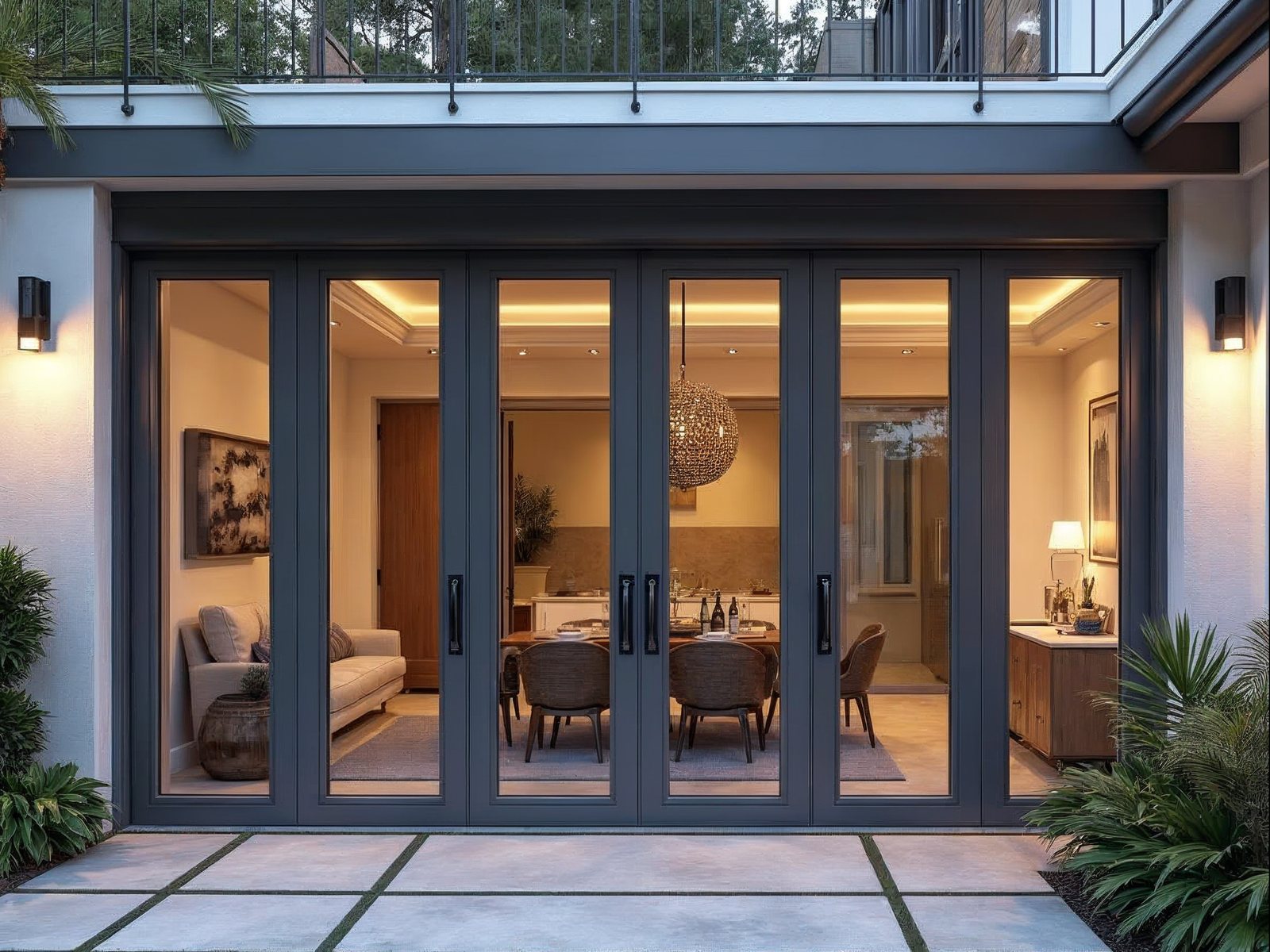
Are aluminum bi-fold doors more expensive than uPVC, and is the premium worth it?
Yes — aluminum bi-fold doors cost roughly 30–60% more than comparably sized uPVC (unplasticized polyvinyl chloride) folding door systems, and for most commercial and high-end residential applications, the premium is worth it.
Here is the honest comparison by system archetype:
| Attribute | Thermal-Break Aluminum (Gladiator) | uPVC Folding Systems | Wood-Clad Folding Systems |
|---|---|---|---|
| Typical price premium vs. uPVC | Base (reference) | 30–60% less | 20–50% more |
| Frame depth / structural rigidity | High — narrow sightlines, high span capacity | Medium — wider frames, lower span limits | High — but wood expands/contracts seasonally |
| Standard glass thickness | 6mm insulating unit | Typically 4–5mm | Varies; often 5–6mm |
| Thermal performance | Good with polyamide thermal break | Comparable on U-factor; bulkier profile | Good — wood has natural insulating properties |
| Finish durability | Powder-coat — does not fade, chip, or yellow | May yellow or warp over time in direct sun | Requires periodic refinishing; vulnerable to moisture |
| Max panel span | Up to ~36 in. wide per panel; tall formats available | Typically limited to shorter spans | Panel width limited by wood weight |
| Maintenance requirement | Minimal — wipe clean, lubricate hardware | Low — but UV degradation over time | High — refinishing, sealing, swelling management |
| Warranty | 15 years (Gladiator) | Varies; typically 5–10 years | Varies; often limited by wood warranty terms |
For builders and developers delivering projects in coastal, high-humidity, or high-UV markets, aluminum's durability advantage over uPVC compounds over the product's service life. The 15-year Gladiator warranty and minimal maintenance profile make the life-cycle cost argument straightforward for clients evaluating total cost of ownership, not just purchase price.
Wood-clad systems cost more than aluminum in most configurations and carry higher maintenance liability — worth noting when spec'd against an aluminum system in a client proposal.
For projects that also include pivot entries or folding windows at service counters, compare Gladiator Pivot Doors and Gladiator Folding Passthrough Windows to complete the aluminum package under one trade account.
How do contractors get wholesale or factory-direct pricing on aluminum bi-fold doors?
Contractors, builders, developers, architects, and dealers access factory-direct pricing through Gladiator's trade and reseller program — not through a retail storefront or online cart. The process is straightforward:
- Apply for a wholesale account. Submit the Reseller & Wholesale Application at GLADIATORWINDOWANDDOORS.COM. Approval is typically fast for licensed contractors, builders, and registered dealers.
- Request a project quote. Provide opening dimensions (rough opening width × height), panel count preference or design intent, finish, glass spec, and swing direction. Gladiator's trade team generates a line-item quote — not a ballpark estimate.
- Review lead times before committing. Standard-size systems ship significantly faster from stock. Made-to-order configurations require production lead time; factor this into your project schedule at rough framing, not at punch-list.
- Plan the rough opening and header correctly. Bi-fold doors require a continuous structural header across the full opening width — no intermediate posts. The rough opening should match the door unit's listed frame size plus the manufacturer's specified clearance (typically ½ in. each side and at the head). Confirm this with your Gladiator trade rep before framing.
- Coordinate freight delivery. Units ship via private, insured carrier. Confirm site access and have labor staged for unboxing — large multi-panel units require two people minimum and care on the threshold substrate before the unit arrives.
Dealers and resellers who consistently spec Gladiator across multiple projects qualify for tiered wholesale pricing. Volume commitments are not required to open an account, but ongoing volume does unlock better pricing tiers.
For a full look at the Gladiator Bi-Folding Doors collection — configurations, finishes, and standard sizes — visit the product collection page or call the trade line directly at 904-822-1078.
Sell Gladiator doors at a wholesale price. Factory-direct aluminum sliding, bi-fold, and pivot doors — premium aluminum, 6mm glass, low-profile tracks, no upcharges, shipped nationwide. Contractors, builders, designers, and retailers get trade pricing and real support.
Apply for a Reseller & Wholesale Account · Call 904-822-1078


