


 904-822-1078

Wholesale Aluminum Bi-Fold & Folding Glass Doors: How Contractors and Dealers Buy Factory-Direct
Contractors, builders, and dealers can buy bifold patio doors for sale wholesale by applying directly for a Gladiator trade account — cutting out the distributor margin and ordering thermal-break aluminum folding door systems at factory-direct pricing, shipped to any jobsite in all 50 states. This guide walks through exactly how the process works: pricing structure, ordering steps, lead times, and the specs your submittal team needs on file.
By the Gladiator Window & Doors Trade Team — factory-direct specialists serving contractors, builders, architects, glaziers, and commercial dealers nationwide.
How do contractors and dealers buy large bi-fold doors wholesale from the factory?
The simplest path is a direct wholesale account with Gladiator Window & Doors: apply online, get approved, and order aluminum bi-fold door systems at trade pricing with no distributor in between. There are no franchise territories, no minimum-order requirements per SKU for standard sizes, and no geographic restrictions — Gladiator ships to all 50 states from warehouses in Florida and California.
The workflow looks like this:
- Apply for a Reseller & Wholesale Account. Submit your business license, contractor or dealer credentials, and typical project volume at the Reseller & Wholesale Application. Approval is typically fast and unlocks trade pricing across the full product line.
- Select standard or custom configurations. Standard-size aluminum bi-fold doors held in stock ship faster; custom rough-opening sizes are made to order. Both routes use the same ordering portal after account approval.
- Submit project specs. For multi-unit or custom orders, submit rough-opening dimensions, panel count, finish, glass spec, and site address. A Gladiator project specialist reviews the submittal and confirms lead time before production is scheduled.
- Receive and install. Doors ship freight to your warehouse or directly to the jobsite. Gladiator provides installation documentation and technical support — no need to route questions through a dealer who also doesn't know the product.
Dealers who resell to homeowners or the hospitality sector follow the same account path, with the added option of drop-shipping directly to their customers under the dealer's project name.
What pricing advantages does factory-direct ordering offer on folding glass door systems?
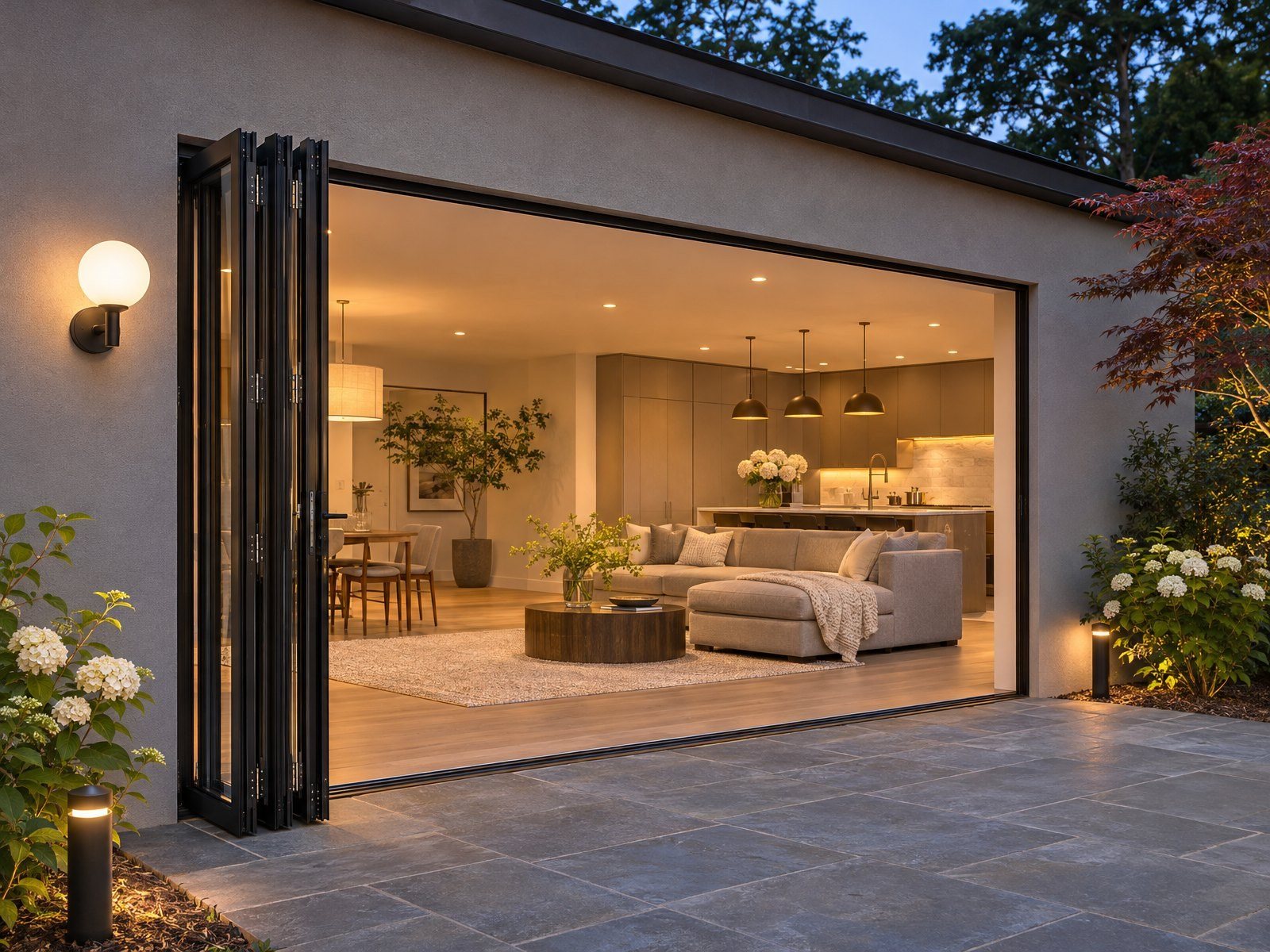
Factory-direct pricing eliminates the distributor and showroom markup layers that typically add 20–40% to the cost of folding glass door systems, so contractors and dealers are paying closer to the true cost of the aluminum system itself. At Gladiator, that means no hidden upcharges for 6mm tempered glass (included as standard), no surcharges for thermal-break aluminum frames, and no extra fees for the low-profile flush track that competitive distributor-network brands often invoice separately.
Key pricing advantages for trade buyers:
- No middleman markup. You are buying from the same source that manufactures and warehouses the product — pricing reflects that.
- 6mm glass at no upcharge. Most dealer-network folding door brands default to thinner glass and charge more for 6mm. Gladiator includes 6mm tempered glass as the standard spec.
- Free nationwide freight. Shipping to any state is included in the quoted price — a line item that can easily run $500–$1,500 per unit when buying through regional distributors.
- No finish upcharges. Matte black, dark grey RAL 7016, white RAL 9010, and bronze anodized are all offered at the same base price — no premium color surcharge.
- Volume tiers for multi-unit projects. Developers and dealers placing orders across multiple units or project phases can negotiate project-level pricing with the Gladiator trade team. This is especially valuable on hospitality, multifamily, and mixed-use projects where the same door configuration repeats across dozens of openings.
The table below compares the typical cost structure of a factory-direct aluminum bi-fold system against dealer-network and wood-clad folding door archetypes at the system level.
| Cost Factor | Gladiator (Factory-Direct) | Dealer-Network Aluminum Systems | Wood-Clad Folding Systems |
|---|---|---|---|
| Glass standard | 6mm tempered, included | Often 4–5mm; 6mm is an upcharge | Varies; often 4mm standard |
| Finish options (at base price) | 4 finishes, no upcharge | 1–2 standard colors; premium upcharge | Factory-painted; custom stain extra |
| Freight to jobsite | Free, all 50 states | Typically invoiced separately | Typically invoiced separately |
| Distributor markup layer | None | 1–2 layers (rep + distributor) | 1–2 layers typical |
| Frame material | Thermal-break aluminum | Aluminum (thermal break varies) | Wood or wood-clad aluminum |
| Low-profile flush track | Standard, no upcharge | Often a premium upgrade | Raised threshold common |
| Warranty | 15 years | Varies by brand, typically 10 years | Varies; wood components limited |
| California Title 24 compliance | Available; NFRC-rated whole-door U-factor | Varies by series | Varies; often lower SHGC performance |
How do dealers place multi-unit orders for large aluminum bi-fold doors?
Dealers and developers placing multi-unit orders should submit a consolidated project spec sheet — one document covering all openings — so that production scheduling and shipping logistics can be coordinated efficiently. For high-volume projects (10+ doors across a development), Gladiator assigns a dedicated project specialist who manages the order from submittal through delivery.
The multi-unit ordering process in practice:
- Consolidated RO schedule. Provide a rough-opening schedule in spreadsheet or PDF format: opening ID, width × height, panel count, configuration (e.g. 4-panel outswing, 6-panel inswing, XO or OX stack direction), finish, and hardware preference. Standard formats used by architects and glaziers work fine.
- Panel and configuration options. Bi-fold systems are available in 2- to 8-panel configurations. Individual panel widths range from approximately 18 inches to 36 inches; total system widths can reach 32 feet or more with an 8-panel run. Stack direction (all panels folding to one side vs. split) must be specified at order time.
- Header and rough-opening planning. For folding glass walls spanning more than 12 feet, structural header depth is a critical planning variable. Gladiator's technical team can review structural drawings and confirm whether the head track and frame system accommodate the header specification — plan this before the RO is framed.
- Phased delivery scheduling. For large developments with staggered build schedules, orders can be placed at once and deliveries phased to match construction milestones. This locks in current pricing while accommodating a rolling completion timeline.
- Drop-ship to multiple addresses. Dealers can route individual door sets to separate jobsite addresses from a single consolidated order — useful for production homebuilders finishing multiple lots in the same subdivision.
Dealers new to ordering factory-direct can also browse in-stock doors ready to ship for standard configurations that move fastest — a good fit for spec-build projects where the opening size is flexible.
What lead times should contractors plan for on wholesale bi-fold door orders?
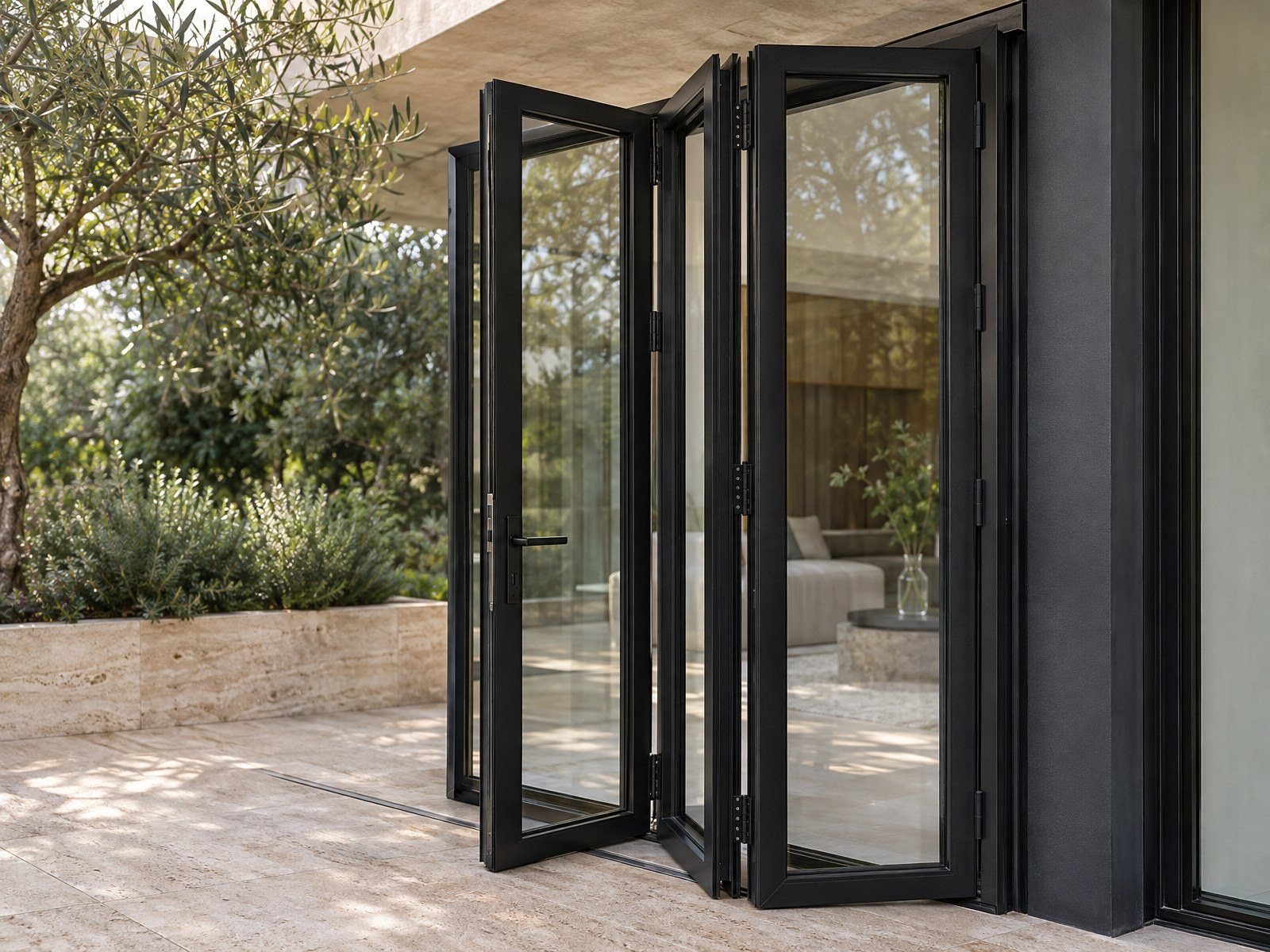
Lead times for wholesale bi-fold door orders depend on whether the configuration is a standard stocked size or a custom rough-opening order — standard sizes ship in days, while custom-fabricated systems typically require 4–8 weeks from order confirmation to delivery. Building this into the construction schedule is the single most important lead-time planning step contractors can take.
Lead-time breakdown by order type:
- In-stock standard sizes: Selected panel counts and dimensions are held in Gladiator's Florida and California warehouses. These can ship within 1–5 business days of order confirmation, making them ideal for fast-track projects, model homes, and replacement jobs with a standard rough opening.
- Custom made-to-order systems: Non-stock configurations — custom widths, non-standard heights, special hardware, or atypical panel counts — are made to order. Plan 4–8 weeks from confirmed submittal to delivery, depending on current production queue depth. The Gladiator project team will confirm the exact lead time at order placement.
- Multi-unit phased projects: For developments with 20+ openings, place the full order early to lock the production slot, even if site deliveries are phased. Early order placement is the most reliable way to protect a project's schedule when multiple trade contractors depend on door delivery to sequence their work.
- Freight transit time: After production, freight transit to most markets runs 3–7 business days depending on destination. West Coast jobsites benefit from the California warehouse; East Coast and Southeast projects typically ship from Florida. Total time-to-site = production lead time + transit.
Pro tip: Frame rough openings to Gladiator's published tolerances before the door ships. Having the RO ready on delivery eliminates the most common installation delay — waiting for framing to be corrected after the door arrives.
What specs and documentation do dealers need to submit a factory-direct bi-fold door order?
To place a factory-direct bi-fold door order, dealers need to provide six core data points per opening: rough-opening width and height, panel count and configuration, stack direction, finish, glass specification, and inswing or outswing designation. Missing any one of these will delay order confirmation, so having them ready upfront keeps production moving.
Required submittal data per opening:
- Rough-opening dimensions (W × H): Measure the structural opening — not the finished frame size. Gladiator's technical team converts RO to frame size using published tolerances, typically 1 inch of clearance per side and head.
- Panel count and configuration: Specify total panel count (2–8 panels) and folding configuration (e.g., 4-panel single-stack, 6-panel split 3+3, 8-panel single-stack).
- Stack direction: State whether panels stack left, right, or split (center-open). This determines hinge orientation and hardware routing — it cannot be changed after fabrication.
- Swing direction: Inswing or outswing. Outswing is common for patio applications; inswing suits interiors and commercial spaces where threshold clearance is a priority.
- Finish: Matte black, dark grey RAL 7016, white RAL 9010, or bronze anodized.
- Glass specification: Standard is 6mm tempered clear. Specify Low-E coating, tinted glass, or laminated options if required by the project — these may affect lead time or pricing.
- Hardware and locking: Note any specific multi-point locking or handle finish preferences. Gladiator's intelligent hardware is included standard; specify any upgrades at order time.
Documentation that speeds approval and production:
- Architectural plan sheets showing the opening location, header specification, and sill detail
- Project address and delivery contact for freight coordination
- Phased delivery schedule (if applicable for multi-unit orders)
- California Title 24 compliance requirements (if the project is in California — Gladiator can provide NFRC whole-door U-factor and SHGC data for energy-code submittals)
Dealers and architects specifying folding glass walls alongside other Gladiator products can combine aluminum bi-fold doors with sliding glass doors, pivot doors, or folding passthrough windows on a single consolidated order — one submittal, one shipping coordination, one point of contact.
Ready to open a wholesale account? The Reseller & Wholesale Application takes minutes and unlocks trade pricing across the full Gladiator lineup.
Sell Gladiator doors at a wholesale price. Factory-direct aluminum sliding, bi-fold, and pivot doors — premium aluminum, 6mm glass, low-profile tracks, no upcharges, shipped nationwide. Contractors, builders, designers, and retailers get trade pricing and real support.
Apply for a Reseller & Wholesale Account · Call 904-822-1078


