


 904-822-1078

Are Aluminum Bi-Fold Doors Better Than uPVC for Large Spans?
For large exterior openings, aluminum bi-fold doors are the stronger choice. Aluminum's inherent rigidity allows frames to stay narrow while spanning widths of 20, 24, or even 32 feet without the panel sag or flex that wider uPVC installations typically develop over time. uPVC (unplasticized polyvinyl chloride) performs well in smaller residential windows and single-panel doors, but the material's lower tensile strength becomes a limiting factor as panel count and total span increase. For anything beyond a modest two- or three-panel configuration, aluminum is the more structurally reliable framing material.
The practical consequence for buyers is straightforward: if you want a true open-wall experience — stacking panels flush to one side and eliminating the boundary between interior and outdoor living space — aluminum gives you more panel options, tighter tolerances, and a more architecturally refined result. Explore Gladiator's full range of aluminum bi-fold doors to see available configurations and standard widths.
How Do Aluminum and uPVC Bi-Fold Doors Compare on Thermal Performance?
Modern thermal-break aluminum bi-fold doors match or exceed the energy performance of uPVC systems, closing the gap that once made uPVC the default choice for insulation-focused buyers. Early aluminum frames conducted heat and cold readily — a genuine weakness. Today's architectural aluminum systems use a polyamide thermal-break strip bonded between the interior and exterior aluminum profiles, interrupting that conductive path and delivering whole-frame U-factors competitive with double- or triple-glazed uPVC.
Gladiator bi-fold doors are engineered with a fully continuous thermal break and come standard with 6mm glass, with insulated glazing unit upgrades available for markets requiring tighter energy compliance. In California, for example, residential fenestration must meet Title 24 prescriptive U-factor thresholds — a standard that thermal-break aluminum systems can meet. uPVC does have a naturally lower conductivity in the raw profile, but the whole-door U-factor (frame plus glass, as certified by NFRC testing methodology) is what actually determines energy performance in the real world. When you compare whole-door numbers rather than raw material conductivity, the performance difference between quality aluminum and quality uPVC is minimal.
Key thermal considerations for bi-fold buyers:
- Thermal break continuity: Ensure the break runs through every part of the frame — head, sill, jamb, and inter-panel stiles — not just the main frame sections.
- Glass unit specification: Glazing accounts for roughly 70–80% of the door's surface area. Upgrading to a low-e, argon-filled insulated glass unit matters more than the frame material alone.
- NFRC whole-door U-factor: Ask for this number specifically. It accounts for both frame and glass in combination and is the most honest performance metric.
- Climate zone: In mild climates (much of the U.S. South and West), the thermal advantage of uPVC over aluminum is negligible once a thermal break is present.
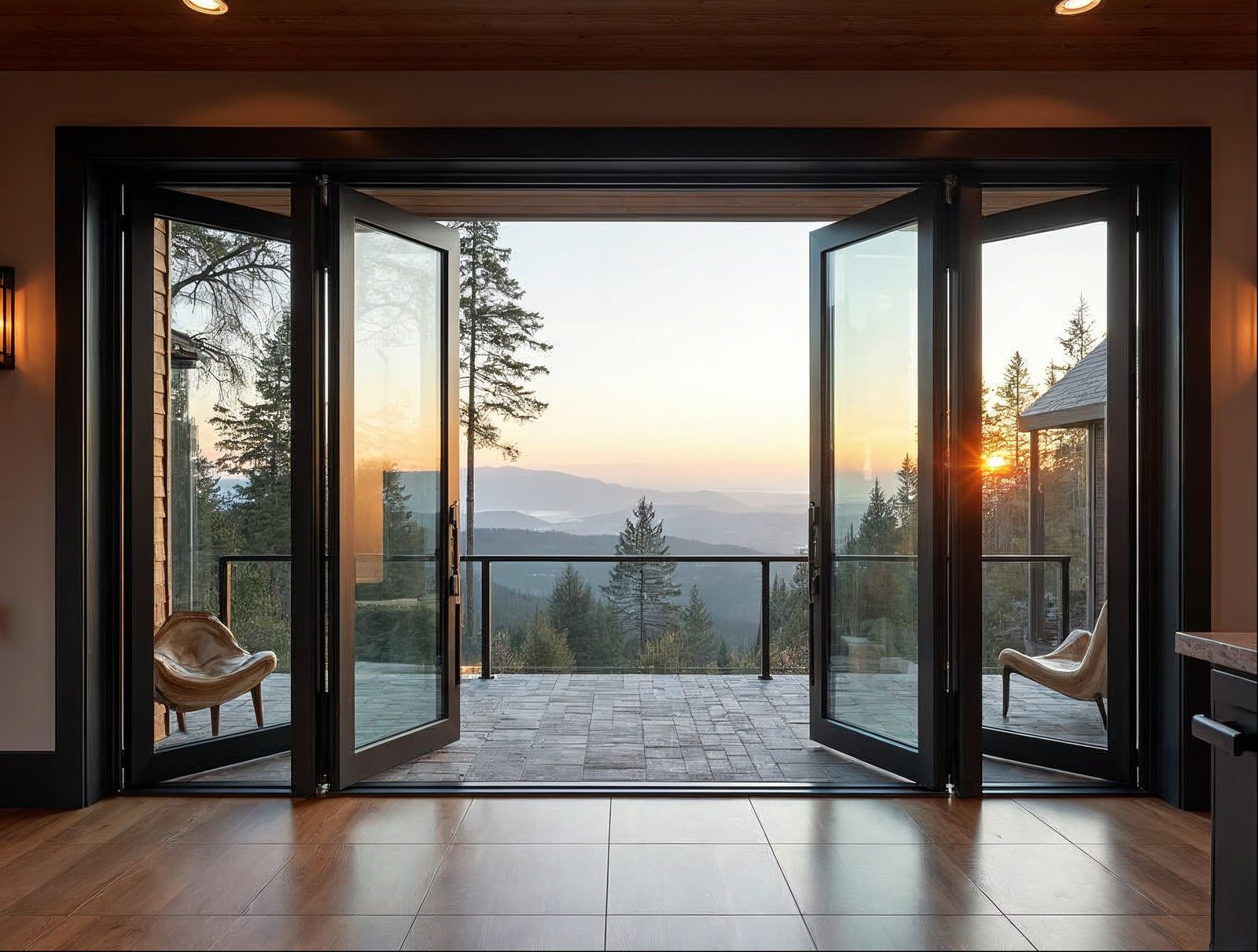
Which Framing Material Holds Up Better Over Time for Exterior Folding Doors?
Aluminum outlasts uPVC in exterior folding door applications, particularly in climates with intense UV exposure, wide temperature swings, or high coastal humidity. uPVC is susceptible to UV-induced yellowing, surface chalking, and dimensional creep — gradual warping or expansion — as the material cycles through heat and cold over years of use. Once a uPVC frame warps or discolors, refinishing is not a practical option; the only remedy is replacement.
Aluminum, by contrast, accepts a factory-applied powder coat finish that bonds at the molecular level, resists fading, and can be touched up or recoated if damage occurs. Gladiator's aluminum bi-fold doors carry a 15-year warranty, reflecting the long service life the material supports. The hardware — multi-point locking, stainless steel rollers, and precision hinges — is designed to the same durability standard as the frame.
A practical longevity comparison:
| Factor | Aluminum Bi-Fold | uPVC Bi-Fold |
|---|---|---|
| UV resistance | Excellent — powder coat holds color | Moderate — yellowing common after 10–15 years |
| Dimensional stability | High — minimal thermal expansion | Lower — plastic expands/contracts more |
| Refinishing options | Yes — powder coat can be reapplied | No practical refinishing option |
| Structural creep over time | Negligible | Possible in large-span panels |
| Typical warranty (quality systems) | 10–15 years | 5–10 years on frames |
What Are the Structural Advantages of Aluminum Bi-Fold Doors Over uPVC?
Aluminum's strength-to-weight ratio is the defining structural advantage over uPVC for folding door systems. Aluminum profiles can be extruded into complex, precise cross-sections that carry heavy glass loads with minimal deflection, while keeping the visible frame sightline narrow — often 2 to 3 inches per stile. uPVC achieves comparable stiffness only by adding steel reinforcing inside the profile, which adds weight, increases the visible frame width, and introduces a potential long-term corrosion point at the steel insert.
For architects and builders specifying large-opening folding systems, this structural difference has direct design implications:
- Larger individual panels: Aluminum supports taller and wider individual panel sizes, enabling fewer panels to cover the same opening — reducing the number of stack panels when open.
- Thinner sightlines: Narrower stiles mean more glass and better views, a priority in high-end residential and commercial design.
- Hardware compatibility: Aluminum's stiffness allows precision multi-point locking hardware to function reliably across the full panel height without the micro-flex that can cause uPVC locking points to misalign over time.
- Integration with structural openings: Aluminum frames can be anchored directly to steel or concrete structural elements, making them suitable for commercial storefronts and high-spec residential projects alike. See how similar structural principles apply in large-format sliding glass door systems.
- Glass thickness capacity: Aluminum systems reliably carry thicker IGU packages — the panel frame doesn't flex under the additional glass weight.
Are Aluminum Bi-Fold Doors Worth the Price Premium Over uPVC?
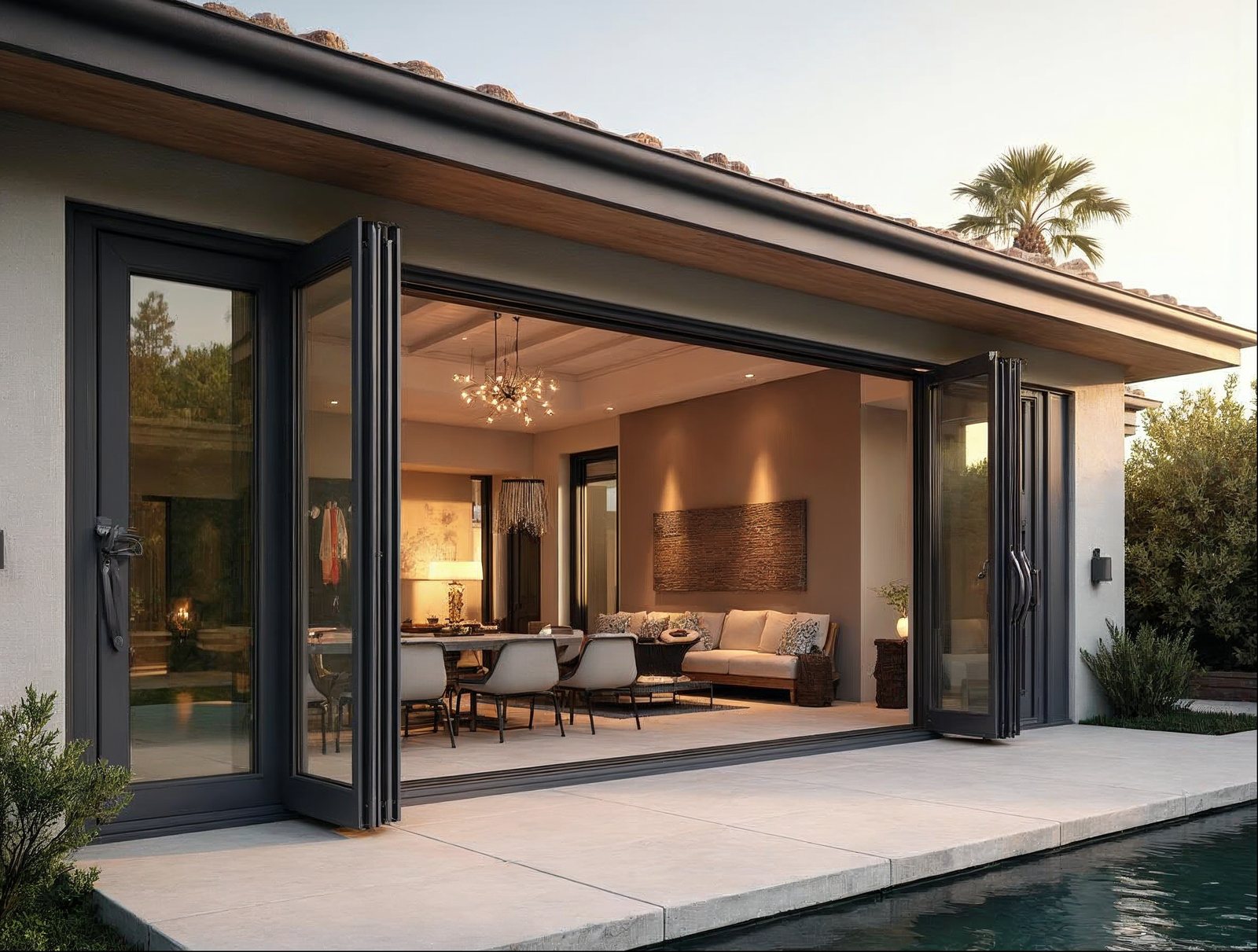
Yes — for large exterior openings, the price premium of aluminum bi-fold doors over uPVC delivers measurable returns in longevity, aesthetics, structural reliability, and resale value. The true cost comparison isn't purchase price alone; it's total cost of ownership over the life of the building.
uPVC bi-fold doors typically cost less at point of purchase. However, the factors that drive long-term value favor aluminum:
- Replacement cycle: If a uPVC system discolors, warps, or develops hardware alignment issues at year 12–15, full replacement is usually the only fix. A quality aluminum system on the same timeline may need only hardware servicing.
- Architectural premium: In design-forward homes, aluminum's slim sightlines and finish quality translate directly to perceived home value. Appraisers and buyers recognize the material.
- Factory-direct pricing: Gladiator sells directly to homeowners, builders, and architects — no dealer markup, no regional distributor margin. That pricing model closes a significant portion of the cost gap between aluminum and uPVC.
- Free nationwide shipping: Gladiator ships to all 50 states at no additional freight charge, which meaningfully reduces the landed cost of aluminum relative to locally sourced uPVC alternatives.
- Standard sizes in stock: If your project timeline is tight, in-stock bi-fold door sizes are available for faster shipping, reducing one of the traditional objections to custom aluminum systems.
For smaller openings — a single two-panel pass-through or a compact interior partition — uPVC can be a reasonable, cost-conscious choice. But for the wide, statement-making exterior openings that define contemporary residential architecture, aluminum bi-fold doors deliver a better material match for the ambition of the project.
If your project includes indoor-outdoor connections beyond just the folding door — such as a bar counter or kitchen pass-through — it's worth considering how a folding passthrough window can complement your bi-fold door system with the same aluminum profile family and finish.
Ready to specify your opening? Browse Gladiator aluminum bi-fold doors or reach out to discuss your project dimensions, panel configuration, and finish options. Builders and architects working on multiple units can also explore our reseller and wholesale program for project pricing.


