


 904-822-1078

What exactly is a bi-fold door system?
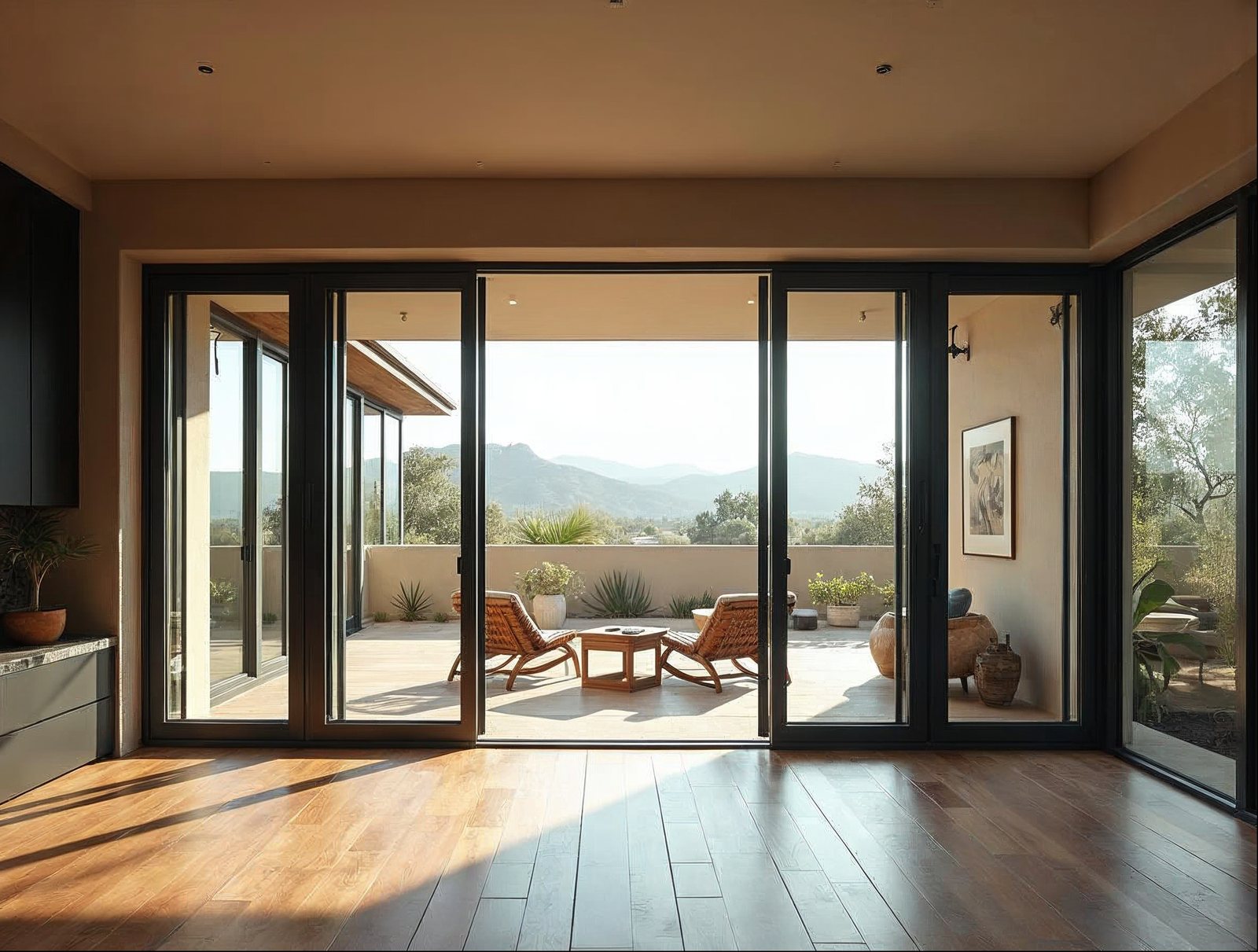
A bi-fold door system is a multi-panel aluminum and glass wall that folds accordion-style along a top-hung or bottom-rolling track, stacking neatly to one or both sides of the opening. Unlike a standard sliding door, every panel moves — so the entire wall can disappear, connecting interior living space directly to a patio, deck, pool area, or courtyard. Systems typically range from two to eight panels and can span openings from roughly six feet up to thirty-two feet or more.
How many panels do I need for my opening?
The right panel count depends on your rough-opening width and how much of that opening you want to clear when the doors are folded back. As a general rule, each panel in a standard residential bi-fold system is approximately 24–36 inches wide. Here's a quick planning reference:
| Opening Width | Typical Panel Count | Clear Opening When Folded |
|---|---|---|
| 6 – 8 ft | 2 panels | ~80–85% of rough opening |
| 10 – 12 ft | 3 panels | ~80–85% of rough opening |
| 14 – 18 ft | 4 – 5 panels | ~80–85% of rough opening |
| 20 – 24 ft | 6 panels | ~80–85% of rough opening |
| 26 – 32 ft | 7 – 8 panels | ~80–85% of rough opening |
Even-numbered panel counts allow the stack to split left and right (a "center-open" configuration), which maximizes the clear opening and creates a dramatic, symmetrical look. Odd-panel counts stack to a single side — simpler structurally and often preferred for narrower openings. When in doubt, go even and split the stack.
What glass options are available for bi-fold doors?
Gladiator bi-fold doors come standard with 6 mm tempered glass, a thicker-than-industry-standard lite that improves acoustic performance, thermal mass, and overall panel rigidity. Beyond that baseline, you can specify:
- Dual-pane insulated glass units (IGUs) — the most popular choice for conditioned living spaces; significantly reduces heat gain and loss compared to single-pane.
- Low-E coatings — a microscopically thin metallic layer that reflects infrared heat while allowing visible light through; essential for California Title 24 energy compliance and recommended in any climate with significant heating or cooling loads.
- Laminated interlayers — a PVB or SGP interlayer bonded between glass lites for enhanced acoustic dampening and increased resistance to breakage, without affecting clarity.
- Tinted and solar-control glazing — reduces glare and solar heat gain; popular for west- and south-facing openings.
For projects in California, specifying a dual-pane IGU with Low-E coating is the most straightforward path to meeting Title 24 fenestration requirements. Gladiator can provide whole-door NFRC U-factor documentation to support your energy compliance submission.
What frame and finish options does a bi-fold door come in?
All Gladiator bi-fold doors use a thermal-break aluminum profile — a layer of non-conductive material bonded inside the aluminum frame that interrupts the path of heat between the interior and exterior face of the door. This is a critical spec that budget-grade and many dealer-network aluminum systems omit, often resulting in condensation, drafts, and higher energy bills over time.
Standard finish options include:
- Matte black — the most requested finish for contemporary and transitional architecture.
- Dark grey RAL 7016 — a warmer, slightly softer alternative to matte black; pairs well with wood accents.
- White RAL 9010 — clean and bright; popular in coastal, Scandinavian, and farmhouse-style homes.
- Bronze anodized — a warm metallic tone that works beautifully with natural stone, brick, and warm-toned exteriors.
Powder-coat finishes are applied electrostatically and baked on, offering superior adhesion and fade resistance compared to painted aluminum. All finishes carry Gladiator's 15-year warranty.
How much does a bi-fold door system cost?
Bi-fold door cost scales with three primary variables: total opening width (which drives panel count), glass specification, and finish. As a broad planning range, residential aluminum bi-fold systems from premium architectural suppliers typically run from the mid-thousands for a compact 3-panel unit to well over $20,000 for a wide 8-panel run with premium glazing.
Gladiator's factory-direct model eliminates the dealer and distributor markup that inflates prices at showrooms — you're buying at the same price a large contractor would pay. Combined with free nationwide shipping to all 50 states, this frequently makes Gladiator's landed cost meaningfully lower than dealer-network brands of comparable specification.
Key cost drivers to budget for:
- Panel count and total width — the single largest variable.
- Glass package — dual-pane Low-E adds cost but reduces energy bills and may be code-required.
- Sill type — a low-profile thermally broken sill costs more than a standard sill but delivers a flatter threshold and better energy performance.
- Hardware and locking — multi-point locking systems, flush pulls, and keyed entry hardware are worth specifying upfront.
- Installation — not included in the door price; budget separately for a qualified installer in your area.
How long does it take to receive a bi-fold door order?
Lead time depends on whether you need a standard or custom size. Gladiator stocks a range of popular configurations that are ready to ship — these can typically leave the warehouse within days rather than weeks, making them ideal for projects on a tight timeline. Custom sizes — non-standard widths, heights, or configurations — are made to order and carry longer lead times; plan for 8–14 weeks depending on complexity and current production volume.
If your opening is close to a standard size, it's worth checking in-stock availability before ordering custom. A skilled installer can often adjust a rough opening by an inch or two to accommodate an in-stock panel count, saving weeks on the schedule.
Can bi-fold doors work for commercial projects?
Yes — bi-fold systems are regularly specified for restaurants, retail spaces, hospitality venues, and mixed-use developments where a wide, operable glass wall creates flexible indoor-outdoor environments. For projects requiring a fixed commercial storefront entrance, Gladiator also offers commercial-grade bi-fold configurations as well as dedicated sliding glass door systems and full commercial storefronts.
Architects and contractors specifying bi-folds at scale can apply for Gladiator's reseller and wholesale program to access trade pricing and project-level support.
What should I check before ordering a bi-fold door?
Before submitting your order, confirm these five things:
- Rough opening dimensions — measure width and height at multiple points; use the smallest reading.
- Stack direction and clearance — make sure there's enough wall or patio space to accommodate the folded panel stack.
- Floor-level transition — bi-fold sill tracks require a consistent, level substrate; plan your flooring transition early.
- Structural header — wide openings need an engineered header; confirm with your contractor or structural engineer before framing.
- Energy code requirements — check whether your jurisdiction requires a minimum U-factor or Solar Heat Gain Coefficient (SHGC) for fenestration.
Ready to get started? Browse Gladiator's full range of bi-fold door systems or check in-stock inventory for configurations that can ship this week.


