


 904-822-1078

What are the pros and cons of a pivot front door compared to a standard entry door?
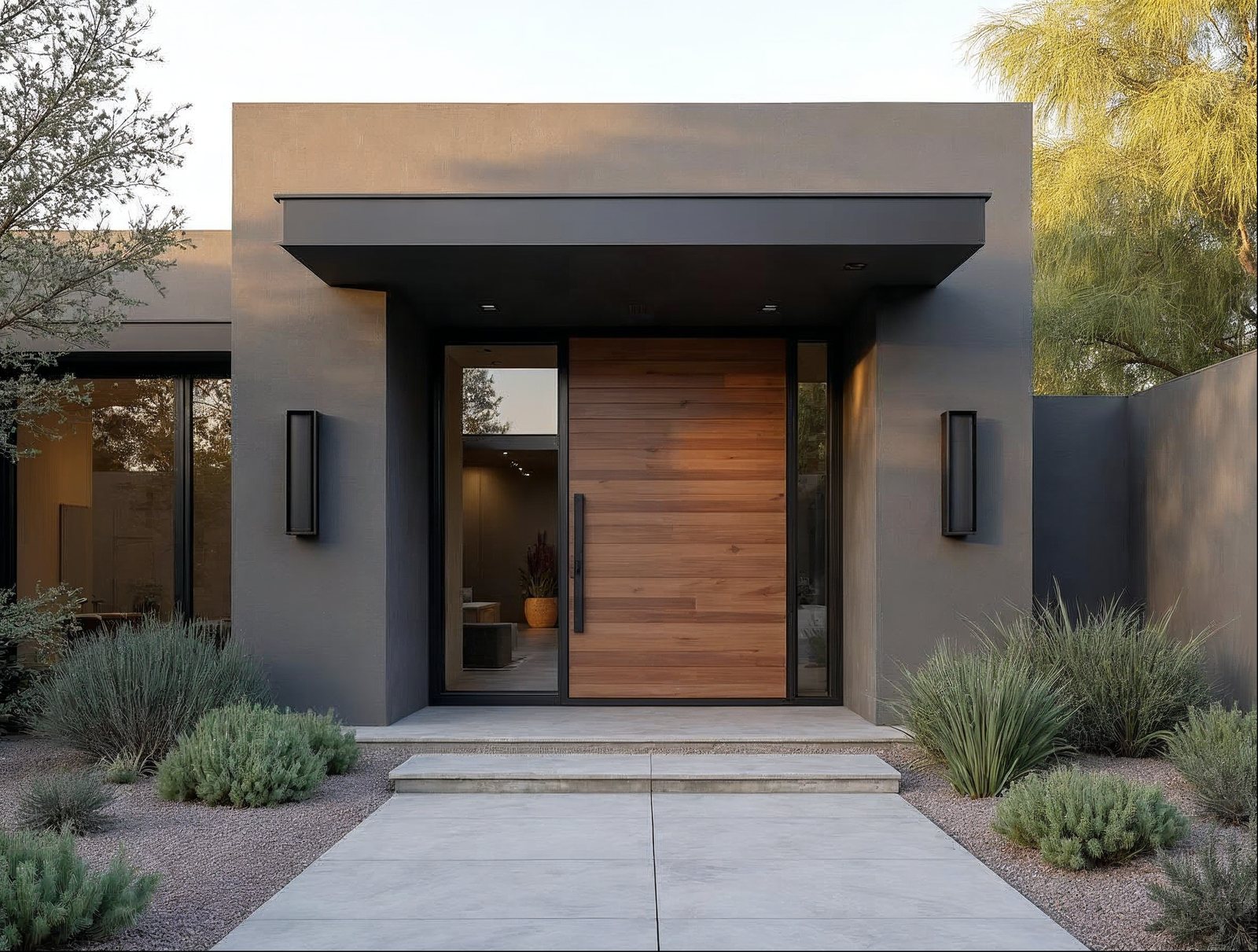
A pivot front door rotates on a central or offset vertical axis rather than swinging from a side-mounted hinge, which allows for dramatically oversized slabs — often 4 to 10 feet wide and 8 to 12 feet tall — that would be physically impossible with conventional side hinges. That single mechanical difference produces nearly every advantage and trade-off in the pivot category.
Pivot Door Pros
- Architectural presence. A floor-to-ceiling aluminum pivot slab makes an immediate design statement that no standard 3/0 × 6/8 hinged door can match. It is the preferred entry choice for modern, contemporary, and minimalist architecture.
- Unlimited scale. Because load is distributed through the pivot hardware to the floor and head rather than three side hinges, slabs can span widths and heights that would rack or sag on a conventional frame.
- Smooth, balanced operation. Quality pivot hardware — especially floor-spring or concealed hydraulic units — returns the door to closed automatically and makes a heavy slab feel nearly weightless in the hand.
- Thermal-break aluminum frame. Premium aluminum pivot systems use a thermal-break extrusion that separates the interior and exterior aluminum faces with a polyamide isolator, reducing conductive heat transfer and helping meet energy codes including California Title 24.
- Glass integration. Large pivot slabs typically carry 6 mm tempered or tempered-laminated glass panels, delivering high visible-light transmittance and robust impact resistance without added thickness.
- Factory-direct value. Ordering direct from a supplier with no dealer markup means a custom aluminum pivot door often costs less than the equivalent from a dealer-network brand at comparable specification.
Pivot Door Cons
- Counter-swing footprint. Because the slab rotates around a central point, the leading edge swings inward and the trailing edge swings outward (or vice versa). You need clearance on both sides of the pivot point, which can be a constraint in tight vestibules or narrow hallways.
- Not weather-tight on its own perimeter. A standard hinged door is compression-sealed on three sides against fixed stops. A pivot door relies on precision perimeter seals and a good threshold; installation quality is therefore more critical.
- Higher structural requirement. The floor pivot socket and header pivot must be anchored to structure, not just finish flooring or drywall. New construction accommodates this easily; retrofitting an existing opening sometimes requires a structural header upgrade.
- Not ideal for sub-standard rough openings. A pivot door installation demands a plumb, square, well-supported opening. Out-of-plumb conditions that a traditional pre-hung door can absorb with shims become more problematic at large scales.
Are pivot front doors practical for everyday use in a residential or commercial building?
Yes — when properly specified and installed, a large aluminum pivot door is entirely practical for daily residential and commercial use, often more so than the visual drama suggests.
The key is hardware selection. A quality floor-spring mechanism uses a hydraulic damper to control swing speed and provide a soft, automatic return to the closed position. This means a 500-pound door slab never slams, never swings free in a wind gust, and self-latches reliably. Users quickly adapt to the slight counter-swing at the trailing edge, and most report the experience feels natural within days.
For commercial use — hotel lobbies, restaurant entrances, office towers — the pivot door is already the dominant architectural choice precisely because it handles high traffic without wear. Side hinges on heavy commercial doors develop play over time; a central pivot bearing is designed to cycle thousands of times per year.
Families with children and pets do well with pivot doors once the counter-swing clearance is respected in the floor plan. For anyone with mobility considerations, the low operating force of a balanced pivot slab can actually be easier than pushing a heavy traditional hinged door.
Explore the full range of configurations in our aluminum pivot door collection to see slab sizes and hardware options that fit different project types.
How do pivot doors hold up over time in terms of hardware and weather sealing?
High-quality pivot hardware is engineered for decades of reliable performance, and the aluminum frame resists corrosion far better than wood or steel alternatives.
The pivot bearing itself — typically a stainless-steel or hardened-alloy assembly — is the component that receives the most load. In a correctly specified system, that bearing carries the full slab weight continuously and is rated for well over 500,000 operating cycles. At one cycle (open/close) per day, that exceeds a human lifetime of use.
Weather sealing on a pivot door relies on three elements: a continuous perimeter gasket compressed when the door is closed, a low-profile threshold seal at the bottom, and precise frame tolerances. Thermally broken aluminum frames maintain those tolerances year-round because the material has a low and predictable thermal expansion coefficient. Wood frames, by contrast, swell, shrink, and warp, gradually compromising the seal geometry.
One area that benefits from periodic attention is the threshold seal. Because the bottom of the pivot slab sweeps across the threshold rather than compressing against a stop, threshold wear is slightly higher than on a hinged door. Replaceable threshold insert seals address this easily.
What maintenance does a large aluminum pivot door require?
Aluminum pivot doors require very little routine maintenance — primarily cleaning, lubrication of the pivot mechanism, and occasional inspection of seals.
- Frame cleaning: Wipe aluminum extrusions and glass with a mild, non-abrasive cleaner two to four times per year. Avoid chlorine-based or acidic cleaners that can etch anodized or powder-coated finishes. Matte black powder coat, the most popular finish, is particularly forgiving and hides minor surface handling.
- Pivot hardware lubrication: Most concealed floor-spring and top-pivot assemblies are factory-filled with hydraulic fluid and sealed for life. Exposed pivot knuckles on surface-mounted designs benefit from a drop of silicone-based lubricant once a year.
- Seal inspection: Check perimeter gaskets and the threshold seal annually. These are field-replaceable components and are the most likely element to show wear over a 10–15 year period.
- Hardware adjustment: Floor-spring closing speed is adjustable via a tension screw. After the first full seasonal temperature cycle, minor re-adjustment is common and takes about five minutes with a flat-head screwdriver.
- Glass cleaning: Standard window cleaning applies. For 6 mm tempered panels, avoid abrasive pads that can micro-scratch the surface over time.
Gladiator's aluminum pivot doors carry a 15-year warranty covering the frame and finish, which reflects the realistic service life of the system under normal residential and light commercial use.
Are pivot doors more expensive to install than traditional hinged entry doors?
Yes — pivot doors typically cost more to purchase and install than a comparably sized traditional hinged entry door, but the gap narrows significantly when you compare like-for-like scale and specification.
Here is a realistic breakdown of the cost drivers:
| Cost Factor | Standard Hinged Entry Door | Large Aluminum Pivot Door |
|---|---|---|
| Door unit price | Lower at standard sizes | Higher — reflects larger slab, precision hardware |
| Structural header | Often existing header is adequate | May require upgraded header in retrofit situations |
| Installation labor | Lower — familiar to most carpenters | Moderate premium — pivot socket setting requires care |
| Factory-direct savings | Variable | Significant — no dealer markup |
| Long-term hardware cost | Hinge replacement common at 10–15 yrs on heavy doors | Pivot bearing designed for lifetime use |
For new construction, the cost premium is smallest because the structural rough opening is planned from the start to accept pivot hardware. For retrofits, budget for a structural assessment of the header and subfloor at the pivot point. Factory-direct pricing — with free nationwide shipping — removes one of the largest traditional cost layers from the equation.
If you are comparing project types and also considering large openings, our bi-fold door systems and sliding glass doors offer alternative ways to create expansive entries at different price points.
What entry opening sizes are best suited to a pivot door design?
Pivot doors are ideally suited to openings from roughly 42 inches wide and up, with the design payoff increasing significantly above 60 inches — the range where conventional hinged doors become structurally impractical.
Here is a practical size guide:
- 36–42 inches wide: A pivot works here but offers modest advantage over a hinged door. The design statement is subtle at this scale. Best justified when height is dramatic — 10 feet or taller.
- 48–72 inches wide: The sweet spot for residential front entries. This range is where the pivot's balanced operation, visual weight, and architectural scale truly differentiate it. Standard 48-inch and 60-inch slabs are available in-stock and ready to ship for faster project timelines.
- 72–96 inches wide (and beyond): The exclusive domain of the pivot. No side-hinged door can be reliably manufactured, shipped, or operated at this width. Hotel lobbies, commercial entries, and high-end residential foyers use this range to create a genuinely monumental entrance.
- Height considerations: Floor-to-ceiling heights of 8 to 14 feet pair naturally with pivot slabs. Taller-than-standard rough openings benefit from the pivot's ability to carry slab weight without stressing a frame at the hinge point.
Panel configuration also matters: some pivot doors incorporate narrow sidelites flanking the main slab to fill a wide rough opening while keeping the operable slab at a manageable 48–60 inch width. This is a common commercial strategy that works beautifully in residential applications too.
For projects where the entry connects to an indoor-outdoor living space, consider pairing a pivot front entry with folding passthrough windows at an adjacent bar or kitchen counter to extend the architectural language throughout the home.
Ready to Spec Your Pivot Door?
Browse the full Gladiator aluminum pivot door collection to explore slab sizes, finish options, and hardware configurations — or check in-stock inventory for standard sizes that ship faster. Builders and architects working on multiple projects can apply for wholesale pricing here.


