


 904-822-1078

Can a Large Aluminum Sliding Glass Door Be Reversed to Open from the Other Side?
In most cases, yes — a large aluminum sliding glass door can be reversed so the active panel slides from the opposite side, but whether it is a simple field adjustment or a full reorder depends entirely on how the system was originally configured. The short answer: panel direction is not always a tool-only swap.
On a standard two-panel sliding system, the active (operable) panel rides in a dedicated track channel, and the fixed panel sits in a separate channel. To reverse the operating side, the panels themselves must be physically switched between channels. On many aluminum systems this is possible on-site, provided the handles, locking hardware, and weatherstripping are also relocated or replaced — because these components are handed (side-specific). On multi-panel pocket sliders or lift-and-slide systems with mortised multipoint locks, reversal typically requires new hardware at minimum, and sometimes a new door order if the sill profile or frame extrusion is directionally asymmetric.
The practical checklist before attempting a reversal:
- Handle and lock hardware: Confirm whether your lock body and handle set are handed or universal. Most architectural-grade systems use handed hardware.
- Track and sill symmetry: Inspect whether the sill extrusion is identical on both sides. An asymmetric sill will not allow a true reversal without replacing the frame.
- Weatherstripping direction: Pile or brush seals are directional. Reversing panels without repositioning seals creates air and water infiltration gaps.
- Panel interlock: On multi-panel systems, the panel that interfaces with the fixed jamb has a specific astragal or seal detail — that detail needs to move to the correct panel after reversal.
Bottom line: for a two-panel sliding door, reversal is often achievable with the right hardware. For large multi-panel or pocket-slider systems, consult your door manufacturer before assuming a field reversal is feasible. Gladiator's team can confirm compatibility for any door in our sliding glass door collection before you commit to a direction.
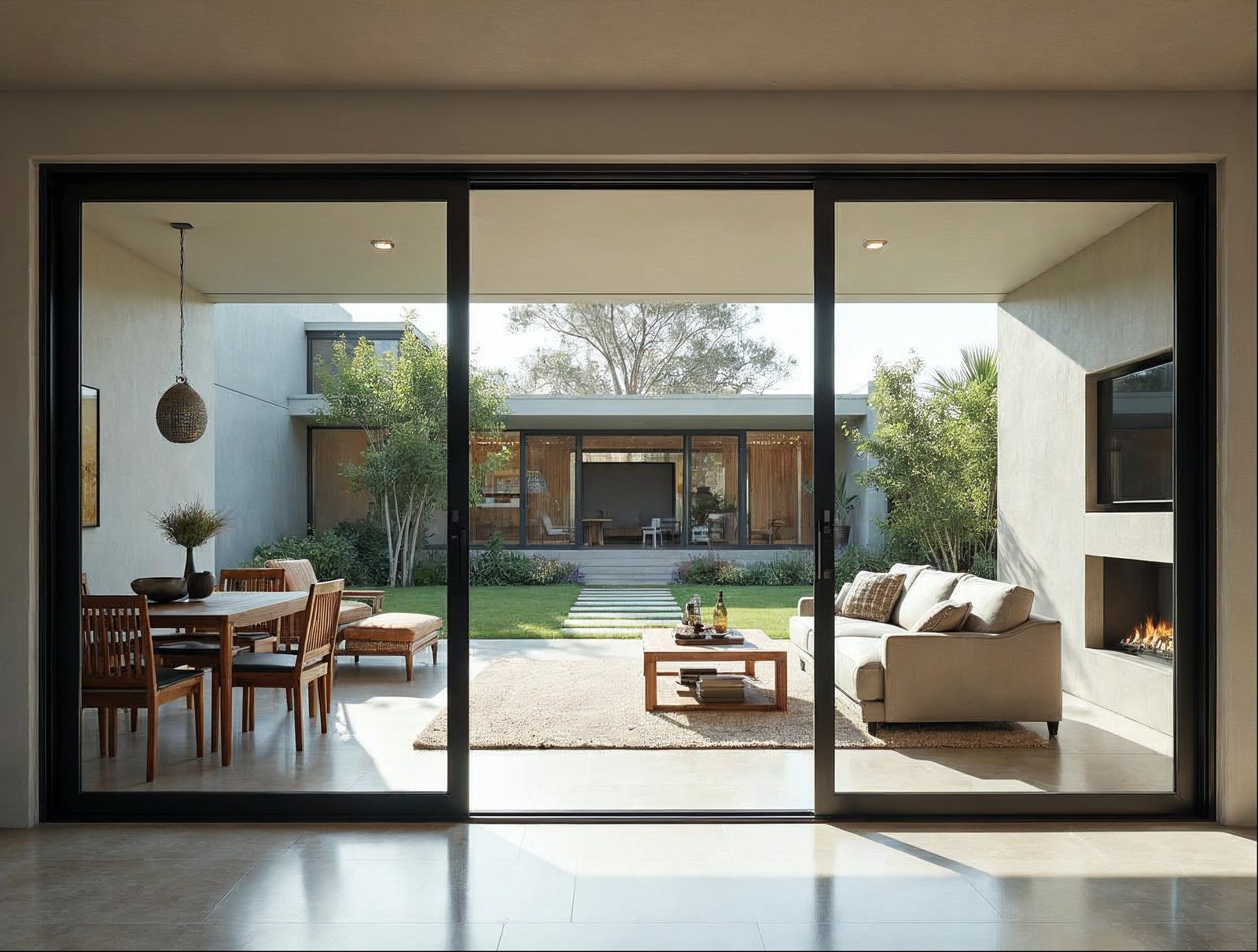
Can a Sliding Glass Door Be Replaced with a Bi-Fold or Multi-Slide System?
Yes — swapping a sliding glass door for a bi-fold or multi-slide system is one of the most popular architectural upgrades homeowners and builders make, and it is structurally achievable in the vast majority of residential openings provided the rough opening and header load path are properly evaluated.
The appeal is clear: a standard sliding door opens a maximum of 50% of the clear span, because one panel is always fixed. A bi-fold door system folds and stacks to the side, opening 90–95% of the total width — dramatically changing how a space connects to the outdoors. A multi-slide pocket system can achieve a similar result by hiding panels inside the wall cavity.
Key considerations when replacing a slider with a folding system:
- Rough opening width: Bi-fold systems are engineered in panel increments (typically 24–36 inches per panel). Your existing rough opening may land perfectly on a standard panel count, or it may need to be widened slightly — which requires a structural header upgrade.
- Sill height and floor transition: Bi-fold systems use a low-profile sill track rather than the deeper sill channel of a slider. The floor transition detail changes, which affects tile, hardwood, or concrete flooring at the threshold.
- Stack space: Folding panels need clearance on the stack side. Confirm there are no obstructions — cabinetry, light switches, or walls — within the stack zone before finalizing panel count and swing direction.
- Glass size and thermal performance: Gladiator bi-fold systems use 6mm glass standard, with thermally broken aluminum frames, keeping energy performance strong even at large spans. This is relevant for California Title 24 compliance and for any climate zone where U-factor matters.
If you want the clean look of full-width opening without folding panels on an exterior face, a pocket multi-slide is another strong option — panels disappear entirely into a wall pocket, leaving an unobstructed opening. Both paths are achievable; the right choice depends on your wall depth, stack space, and architectural intent.
Can Sliding Glass Doors Be Removed and Reinstalled in a Different Opening?
Technically yes, but it is rarely cost-effective unless the new opening is the same size as the original. Aluminum sliding door frames are cut and assembled to a specific rough opening dimension. Moving a door unit to a differently sized opening means the frame either won't fill the space (requiring filler pieces that compromise aesthetics and weather sealing) or won't fit at all.
There are scenarios where reinstallation in a new location makes sense:
- You are adding an identical opening in a home addition or a new building on the same property.
- You are a builder reusing a door from a model home or spec project in an identical floor plan.
- The door is being moved to the same rough opening after a temporary removal for remodeling work (e.g., flooring replacement, framing repairs).
In most other cases, the smarter move is to treat the existing door as a trade-in or salvage, and order a new system sized precisely for the new opening. Because Gladiator offers in-stock doors ready to ship in popular standard sizes, lead time on a replacement is often shorter than you'd expect — standard-size units can ship in days rather than the weeks typical of fully custom orders.
One important practical note: when removing a large sliding door for any purpose, the structural header above the opening must remain properly supported throughout. Never remove the frame before confirming the load path is braced — this applies whether you are reinstalling the same door or swapping in a new system.
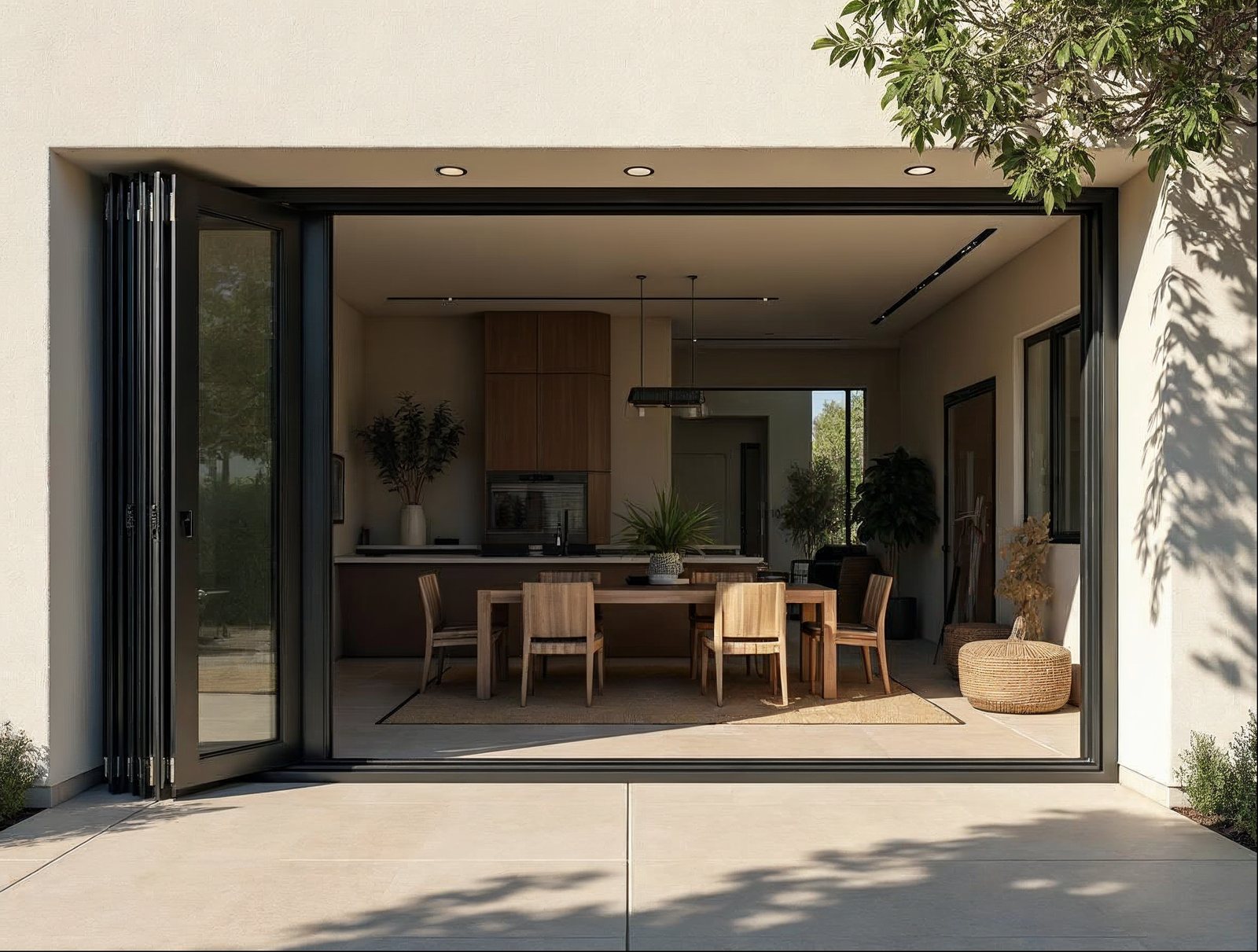
Can Sliding Glass Doors Open on Both Sides Simultaneously?
Yes — this is achieved through a dual-active or center-meeting panel configuration, and it is a feature worth specifying at the time of order rather than attempting to retrofit later. In a standard sliding door, one panel is fixed and one slides. In a dual-active (or "OX/XO" becoming "XX") layout, both panels are operable and slide toward their respective jambs, meeting in the middle when closed.
This configuration offers several real benefits:
- Symmetrical operation: Either occupant — inside or outside — can open from their nearest side without crossing the room to reach a single operating panel.
- Larger effective opening: When both panels slide fully open, the clear opening approaches the full width of the frame, similar in feel to a bi-fold or pocket system but with the slim-profile aesthetics of a sliding door.
- Architectural balance: Dual-active configurations look symmetrical from both interior and exterior elevations, which matters for modern and contemporary homes.
The trade-off is that dual-active systems require a center meeting stile detail — a weatherstripped vertical seal where the two active panels meet. This is a different detail than a panel-to-fixed-jamb seal, and it must be engineered into the original frame. You cannot reliably convert a fixed panel to an active panel in the field on most architectural aluminum systems without replacing the frame.
For very large openings where maximum airflow and pass-through access matter on both sides, a bi-fold accordion system or a multi-panel pocket slider may actually be a stronger solution than a dual-active slider — because bi-fold systems open nearly the full clear span regardless of panel count.
What Are the Limitations of Reconfiguring an Existing Large Sliding Glass Door System?
The biggest limitation is that aluminum door frames are dimensionally fixed at the time of manufacture — they are not modular field assemblies you can trim, extend, or reroute like wood framing. Understanding what can and cannot be changed in the field protects you from expensive surprises during a renovation.
What you generally can change in the field:
- Handle and lock sets (if the replacement hardware matches the existing prep)
- Rollers and track hardware (wear components, not structural)
- Screen panels (size-matched replacements)
- Glass (if the replacement glass matches the original pocket dimension and weight spec)
- Panel stack direction on some two-panel systems (as described above)
What you generally cannot change without a new door order:
- Overall frame width or height
- Panel count (adding or removing panels changes the frame geometry entirely)
- Converting a fixed panel to an active panel on most systems
- Changing from a sliding system to a pocket-slide or bi-fold system (different rough opening requirements and sill details)
- Glass thickness upgrades beyond the frame's designed pocket depth
A practical comparison of reconfiguration options:
| Reconfiguration Goal | Field-Achievable? | Notes |
|---|---|---|
| Reverse active panel direction | Sometimes | Depends on hardware and sill symmetry; verify before attempting |
| Replace slider with bi-fold system | Requires new order | Different frame, sill, and often rough opening; plan for header work |
| Reinstall in new opening (same size) | Yes | Feasible if dimensions match exactly |
| Add dual-active (both panels slide) | No | Requires new frame with center meeting stile detail |
| Swap glass thickness | Limited | Only within original pocket depth; confirm with manufacturer |
| Change panel count | No | New frame order required |
The clearest path when a reconfiguration goal exceeds what is field-achievable: order a new system sized and configured exactly for your current intent, rather than working around an original spec that no longer fits your needs. For openings where the goal is maximum flex — wide spans, variable configurations, indoor-outdoor flow — a bi-fold door or a passthrough system like a folding passthrough window may be a more versatile long-term investment than a reconfigured slider.
Ready to spec the right system the first time? Browse Gladiator's sliding glass door collection or check in-stock inventory for standard sizes that ship fast — no middleman, factory-direct pricing, and free shipping to all 50 states.


