


 904-822-1078

Can Large Aluminum Sliding Glass Doors Come with Blinds Built Into the Glass Unit?
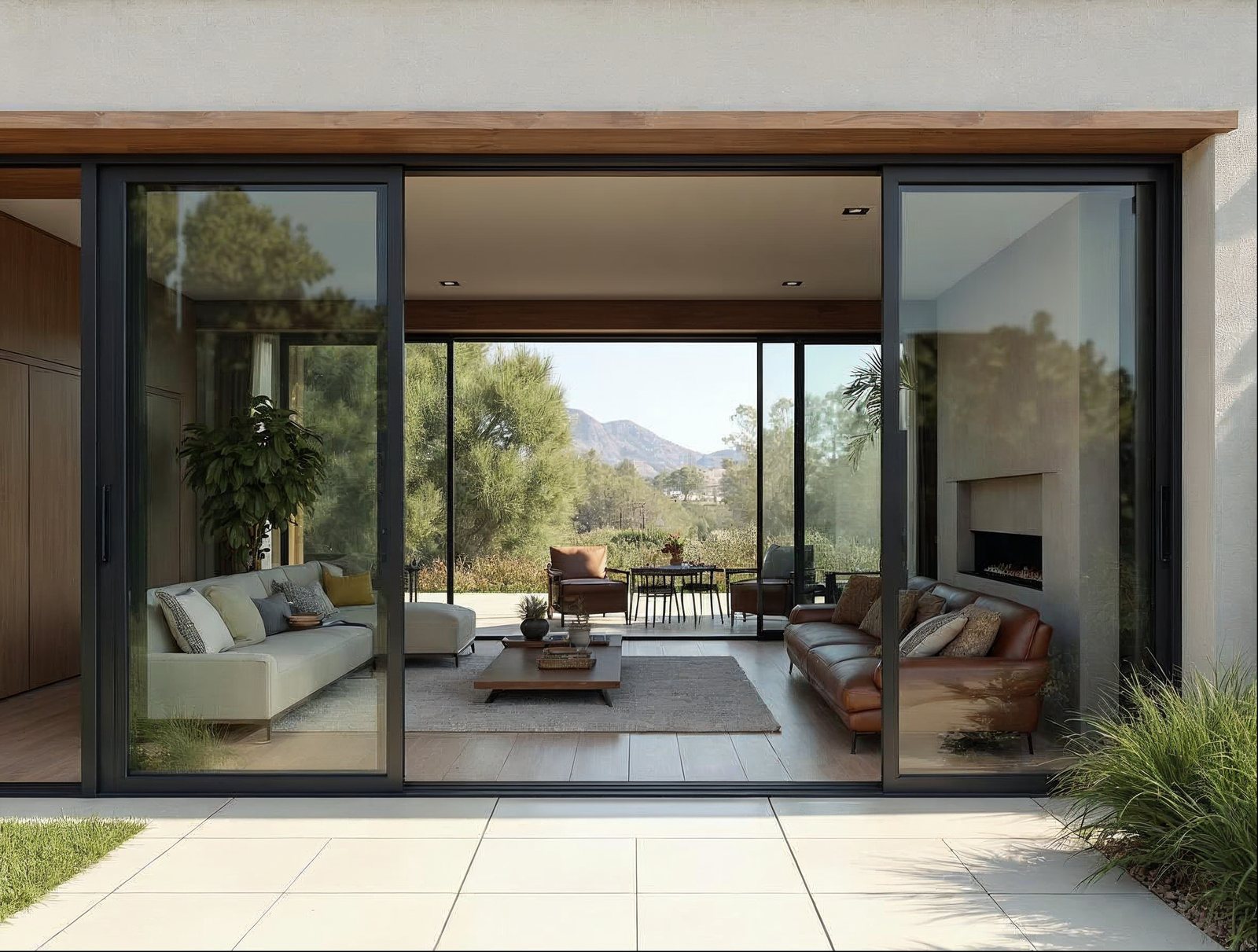
Yes — large aluminum sliding glass doors can be ordered with between-the-glass (BTG) blinds factory-sealed inside the insulated glass unit (IGU). The blind assembly is sandwiched between the two panes of glass before the unit is sealed, so the slats are never exposed to room air, dust, or physical contact. This option is available on multi-panel sliding systems in widths well beyond 20 feet, making it practical for the oversized openings that premium aluminum framing is specifically engineered to span.
At Gladiator, our aluminum sliding glass doors are available in custom sizes with a range of glass packages. If you are considering integrated blinds, specifying them at the order stage is essential — they cannot be retrofitted into an existing sealed unit. Planning ahead is the key.
How Do Between-the-Glass Blinds Work on Large Sliding Patio Doors?
Between-the-glass blinds operate through a magnetic or cord-free control mechanism that passes through the edge of the glass seal without breaking it. A small external control — typically a magnetic wand, a low-profile knob, or a cord loop routed through the frame — lets you tilt the slats or raise and lower the blind without ever opening the sealed cavity. Because the mechanism is enclosed, there are no exposed cords in the living space, which is a meaningful safety advantage in homes with children or pets.
On large multi-panel sliding doors, each individual glass panel contains its own sealed blind unit, and each is operated independently. A six-panel system, for example, gives you six independently adjustable zones of privacy and light control across the full opening. The slats themselves are typically made of aluminum or a fabric weave, and they sit in the dry air gap between the panes — meaning they never warp, yellow, or accumulate the household dust that plagues conventional blinds.
What Are the Pros and Cons of Built-In Blinds vs. External Shades for Large Sliding Doors?
Integrated blinds and external treatments each have a legitimate place depending on how you use the door, your interior design priorities, and your long-term maintenance tolerance. Here is an honest side-by-side:
| Factor | Between-the-Glass Blinds | External Shades / Drapery |
|---|---|---|
| Dust & cleaning | Zero — sealed from room air | Regular cleaning required |
| Child & pet safety | No exposed cords or moving parts | Cord-free options exist but add cost |
| Upfront cost | Higher (part of door order) | Lower to moderate depending on treatment |
| Replaceability | Requires IGU replacement if blind fails | Easy to replace independently |
| Design flexibility | Limited palette (aluminum or fabric slats) | Enormous range of fabrics, colours, opacity |
| Blackout capability | Good privacy; not full blackout | True blackout liners available |
| View when open | Fully clear — slats retract inside unit | Stacked panel or puddle fabric at sides |
| Motorization | Limited; usually manual wand/knob | Full motorization widely available |
Bottom line: Built-in blinds win on maintenance and safety for busy households. External shades win on design versatility, blackout performance, and ease of future updates. Many buyers opt for BTG blinds on the primary panels for daily privacy and add a simple linen panel at one side purely for aesthetics.
Do Integrated Blinds Affect the Thermal Performance or U-Factor of a Large Sliding Door?
This is the question that matters most for energy-conscious buyers — and the answer is nuanced. A between-the-glass blind assembly itself does not automatically improve the U-factor of the sealed unit. What matters is the glass package surrounding it: the number of panes, the low-e coating specification, the gas fill (argon is standard; krypton is an upgrade), and critically, whether the door frame uses a true thermal break.
Gladiator sliding doors feature a thermal-break aluminum frame — a non-conductive polyamide barrier that interrupts the conductive aluminum path between inside and outside. This is the single largest driver of whole-door U-factor improvement, and it is a specification that bargain-tier systems frequently omit. Our glass starts at 6mm thickness as standard, and NFRC U-factors are measured for the complete door assembly, not just the center-of-glass, which is the only honest way to evaluate thermal performance on a large framed opening.
In practice, adding a BTG blind to a well-specified double-pane low-e unit can provide a modest additional layer of solar control when the slats are closed, reducing solar heat gain. But it does not meaningfully change the conductive U-factor. If your project must meet California Title 24 energy compliance or a similar prescriptive energy code, confirm the full door assembly's NFRC-certified U-factor and solar heat gain coefficient (SHGC) — the blind is not a substitute for the correct glass specification.
What Window Treatment Options Work Best for Oversized Sliding Glass Doors?
Oversized sliding doors — openings commonly running 16 to 32 feet or more — create a genuine design and function challenge for window treatments. The scale of the opening amplifies every weakness: heavy drapes sag, low-quality rollers bind, and standard blind widths leave unsightly gaps. Here are the approaches that actually perform at large scale:
1. Between-the-Glass Blinds (Integrated)
As covered above, the cleanest solution for low-maintenance households. Specify at order time. Works particularly well on doors in rooms where cleanliness is paramount, such as kitchens adjacent to outdoor dining areas.
2. Motorized Roller Shades
The most popular aftermarket choice for large openings. A single motorized shade can span an entire panel width, and multiple shades can be grouped on a single app or remote control for simultaneous operation. Solar-screen fabrics (openness factors of 1–5%) give excellent glare control while preserving the view. Blackout fabrics are available where full room darkening is needed. Heavy-duty cassette systems are essential at widths above 96 inches to prevent sag and uneven rollup.
3. Panel Track Systems
A panel track (also called a panel glide) operates like a horizontal sliding blind — wide fabric panels traverse a ceiling-mounted track. The visual result is clean and architectural, making it a strong match for the minimal lines of an aluminum sliding door. The panels stack to one side when the door is in use, similar to how the door itself operates. Ensure the stack depth is accounted for in your floor plan.
4. Exterior Solar Shading
For south- and west-facing openings where solar gain is the primary concern, exterior roller screens or fixed louvred overhangs (such as an aluminum pergola with louvered roof) intercept sunlight before it hits the glass. This approach is thermally superior to any interior treatment because it stops solar heat gain at the source. An exterior pergola also extends the usable outdoor area, creating a shaded transition zone that complements the indoor-outdoor flow a sliding door is designed to provide.
5. Layered Approach: Sheer + Blackout
For media rooms or bedrooms with large sliding doors, a double-track system carrying a daytime sheer and a nighttime blackout roller gives full flexibility at any hour. The sheer layer diffuses harsh direct light during the day; the blackout drops for sleep or screen use. This is also the easiest configuration to motorize and automate.
If your project timeline is pressing, note that standard-size sliding doors in our in-stock inventory ship significantly faster than custom orders — useful when window treatment planning and door arrival need to be coordinated with a contractor schedule.
For very large or commercial openings where privacy and branding matter, explore how our bi-fold door systems pair with exterior fixed-frame screens, or how a folding passthrough window can create a dedicated servery zone that operates independently from a main sliding door panel.
Making the Right Call for Your Opening
Large sliding glass doors with built-in blinds are a genuinely practical choice for the right buyer: anyone who values clean sightlines, zero-maintenance privacy, and a child- or pet-safe environment. They are less ideal for buyers who want full blackout capability, rich fabric aesthetics, or the ability to upgrade their treatment independently of their glass in the future.
The most important rule is to decide before you order. Between-the-glass blinds must be specified as part of the original glass unit — there is no retrofit path. Get your glass specification (U-factor, SHGC, low-e coating, and gas fill) confirmed at the same time, so your integrated blind choice works in harmony with your energy performance goals rather than in spite of them.
Ready to configure your system? Browse our sliding glass door collection or reach out to our team for a specification consultation — no pressure, just clarity on what will work for your opening.


