


 904-822-1078

What exactly is a pivot door — and how does it differ from a standard entry door?
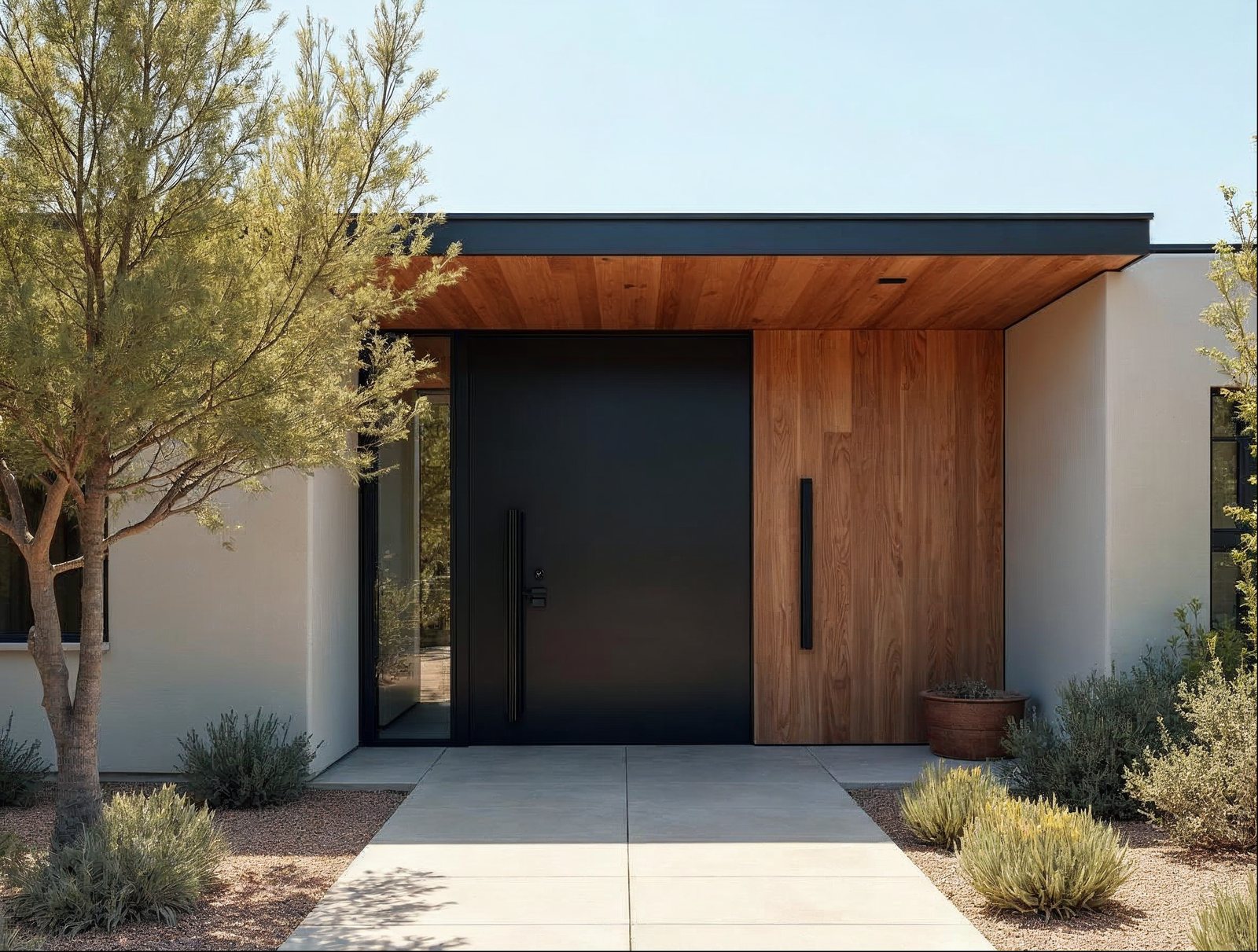
A pivot door rotates on a top-and-bottom pivot pin set into the floor and header, rather than hanging on side-mounted hinges. That single mechanical difference unlocks slab widths and heights that a conventional hinged door simply cannot achieve — often 4 to 10 feet wide and up to 12 feet tall as a single panel. The result is an oversized, dramatic entry that swings with almost no effort regardless of size, because the pivot point sits roughly one-tenth of the way in from the leading edge, distributing the slab's weight between the floor plate and the header rather than cantilevering it from one side.
Beyond the mechanics, pivot doors carry a distinct architectural language: clean, frameless-looking sight lines, flush thresholds, and a monolithic presence that signals intentional design from the curb. They are increasingly the door of choice for high-end custom homes, modern remodels, and statement commercial entries.
What sizes can a pivot door realistically span?
Pivot doors are practical anywhere from about 36 inches wide up to 10 feet wide as a single slab, with heights commonly reaching 10 to 12 feet. That range makes them viable for a standard 3-foot entry opening all the way up to a double-height grand entrance — something no side-hung door can match without adding a second panel and a center post.
At Gladiator, our aluminum pivot doors are available in both standard in-stock sizes that ship faster and fully custom configurations sized to your rough opening. The most popular residential widths fall between 48 inches and 72 inches; widths beyond 84 inches are common in architect-driven projects where the door is as much sculpture as function.
Key sizing considerations:
- Rough opening width: Allow at least ¾ inch on each side for the frame and shimming.
- Slab weight: A 6-foot-wide by 10-foot-tall aluminum door with insulated glass can exceed 400 lbs — the pivot hardware is engineered for this, but the sub-floor and header must be sized accordingly.
- Swing clearance: Because the slab extends slightly behind the pivot point when open, verify you have 10–15% of the slab width clear on the interior latch side.
- Threshold height: Our low-profile sill keeps the step-over minimal, a critical detail for universal accessibility on oversized slabs.
What glass options are available, and how do they affect energy performance?
Gladiator pivot doors come standard with 6 mm tempered insulated glass units (IGU), which outperforms the thinner glass common in entry-level imported systems. For energy-conscious projects — particularly those targeting California Title 24 compliance — we offer dual-pane and triple-pane configurations with low-e coatings and argon or krypton gas fills.
Because our frames use a thermally broken aluminum profile, the assembly is rated with a whole-door NFRC U-factor rather than a center-of-glass-only figure. That distinction matters: a frame with thermal breaks prevents condensation on the interior aluminum and meaningfully reduces heat transfer at the edges, where most energy loss in an aluminum door occurs.
Glass upgrade options to consider:
- Standard dual-pane 6 mm tempered IGU — suitable for most climates; meets most energy codes.
- Low-e dual-pane — adds a metallic coating that reflects infrared heat; ideal for sun-exposed west- and south-facing entries.
- Tinted or frosted glass — maintains privacy without sacrificing the oversized slab aesthetic.
- Triple-pane — maximum thermal performance; common in cold-climate builds and passive-house projects.
If your project includes other glazed openings, pairing a pivot entry with aluminum bi-fold doors at the rear of the home creates a consistent architectural frame system with matched profiles and finishes throughout.
What finishes are available on aluminum pivot doors?
Aluminum is the ideal substrate for a pivot door at this scale precisely because it holds finish without warping, swelling, or cracking the way wood does on a 400-pound slab exposed to daily UV and temperature cycling. Our pivot doors are available in four powder-coat and anodized finishes:
- Matte Black — the most requested finish; works across modern, transitional, and industrial architectural styles.
- Dark Grey RAL 7016 — a sophisticated charcoal that reads softer than black in bright daylight.
- White RAL 9010 — crisp and clean; popular in coastal contemporary and Scandinavian-influenced designs.
- Bronze Anodized — a warm, metallic tone that integrates naturally with stone and wood cladding.
All finishes are factory-applied and warranted against peeling and fading under our 15-year warranty — the same coverage that extends across our full door and window lineup.
How much does a pivot door cost, and what drives the price?
A quality aluminum pivot door sold factory-direct typically ranges from around $3,000 for a standard in-stock size up to $15,000 or more for a fully custom oversized slab with premium glass and specialty hardware. Because we sell direct — with no dealer or showroom markup in the chain — the price you see reflects the actual product, not a distribution margin.
The biggest cost drivers, in rough order of impact:
- Slab size: Wider and taller means more aluminum, more glass, and heavier-duty pivot hardware. This is the single largest variable.
- Glass specification: Triple-pane and specialty coatings add meaningfully to material cost but can pay back in energy savings over time.
- Hardware grade: Concealed floor closers, electronic access, and designer lever sets are priced separately from the door slab.
- Finish: Anodized finishes carry a modest premium over powder-coat; custom RAL colors may add lead time.
- Sidelites and transoms: Adding fixed glass panels flanking the door increases the total opening cost but dramatically amplifies the visual impact.
Standard in-stock pivot doors ship significantly faster than fully custom orders. If your project timeline is tight, check our in-stock doors ready to ship for available sizes and lead times before placing a custom order.
What should I know about pivot door installation?
Pivot door installation is more demanding than a standard entry door swap, and planning ahead prevents the most common on-site surprises. The floor pivot plate must be anchored into a solid structural substrate — a typical wood subfloor may need a steel plate or concrete pour to handle the point load from a heavy slab. The header must similarly be engineered to carry the top pivot load without deflection over time.
Practical installation checklist:
- Confirm sub-floor or slab capacity with your structural engineer before ordering.
- Verify the rough opening is plumb, level, and square — pivot doors are unforgiving of out-of-square openings at this scale.
- Coordinate the floor pivot recess with your flooring contractor before tile or hardwood is laid.
- Plan your weatherstripping and sill detail early; our low-profile threshold ships with the door and must be set before finish flooring.
- Allow adequate interior swing clearance — furniture, rugs, and wall art are frequently overlooked.
Many of our builder and architect clients pair a pivot front door with large-format sliding glass doors at the main living space, creating a consistent aluminum system from the entry through to the rear of the home. If you are a trade professional, our reseller and wholesale program offers trade pricing and project-level support.
How long does a pivot door last, and what maintenance does it require?
A well-specified aluminum pivot door with quality hardware will perform reliably for decades. Aluminum does not rot, warp, or corrode the way wood and steel do in coastal or humid environments, and the powder-coat or anodized finish is UV-stable for the life of the frame under normal conditions.
Routine maintenance is minimal:
- Clean the frame and glass with a mild soap solution quarterly — avoid abrasive cleaners that scratch powder-coat.
- Lubricate the floor pivot pin and top pivot bearing annually with the manufacturer-recommended lubricant; this keeps the swing effortless on heavy slabs.
- Inspect and re-compress weatherstripping every two to three years; the seals on an oversized slab see more compression cycling than a standard door.
- Check hardware fasteners annually on doors in high-traffic or high-wind-exposure locations.
Our 15-year warranty covers the frame and finish against manufacturing defects, giving you a clear benchmark for the expected product lifespan.
Is a pivot door right for my project?
A pivot door is the right choice when architectural impact, oversized spans, and long-term durability are priorities, and when you have the structural conditions to support one. It is not the ideal solution for every opening — a narrow 32-inch entry in a traditional home, for example, is better served by a conventional door. But for a modern custom home, a high-end remodel, or a commercial entry where the door needs to make a statement, a thermally broken aluminum pivot with quality glass is hard to surpass.
Explore the full range of configurations, finishes, and sizes in our pivot door collection — or contact our team for a project consultation with no sales pressure.


