


 904-822-1078

Exterior pocket sliding glass doors disappear completely into the wall when open — creating a true indoor-outdoor connection that no standard multi-slide or stacking slider can replicate. For builders, architects, and developers specifying large residential or commercial openings in 2026, pocket sliders represent the cleanest architectural solution available. This guide covers what they cost, how they're framed, when to specify them, and how to order factory-direct at trade pricing.
How much do exterior pocket sliding glass doors cost?
Exterior pocket sliding glass doors typically range from $4,500 to $18,000+ for the door system itself, depending on opening width, panel count, glass package, and finish — before installation. At Gladiator Window & Doors, factory-direct pricing on aluminum pocket sliding systems starts around $5,500 for a two-panel configuration and scales with each additional panel leaf and overall system width. Because we manufacture and ship direct with no dealer markup, trade buyers receive pricing that is often 20–35% lower than equivalent systems purchased through a distribution or dealer network.
Key cost drivers to communicate to your clients and project budget:
- Panel count and total width — a 4-panel pocket system spanning 16 ft costs meaningfully more than a 2-panel spanning 8 ft, primarily due to additional track hardware and pocket framing requirements.
- Glass package — standard 6mm tempered glass is included; dual-pane insulated units with low-E coatings (important for California Title 24 compliance) add to the unit cost but reduce long-run energy load.
- Finish — matte black, dark grey RAL 7016, white RAL 9010, and bronze anodized are standard. Custom powder coat is available on larger project orders.
- Hardware grade — flush pulls, recessed hardware, and multipoint locking upgrades carry a line-item premium.
- Rough opening size and header span — wide openings require engineered header packages that are the GC's responsibility but should be budgeted early.
For in-stock configurations that ship faster, see our in-stock doors ready to ship — standard sizes are held at the factory and can dramatically compress your schedule.
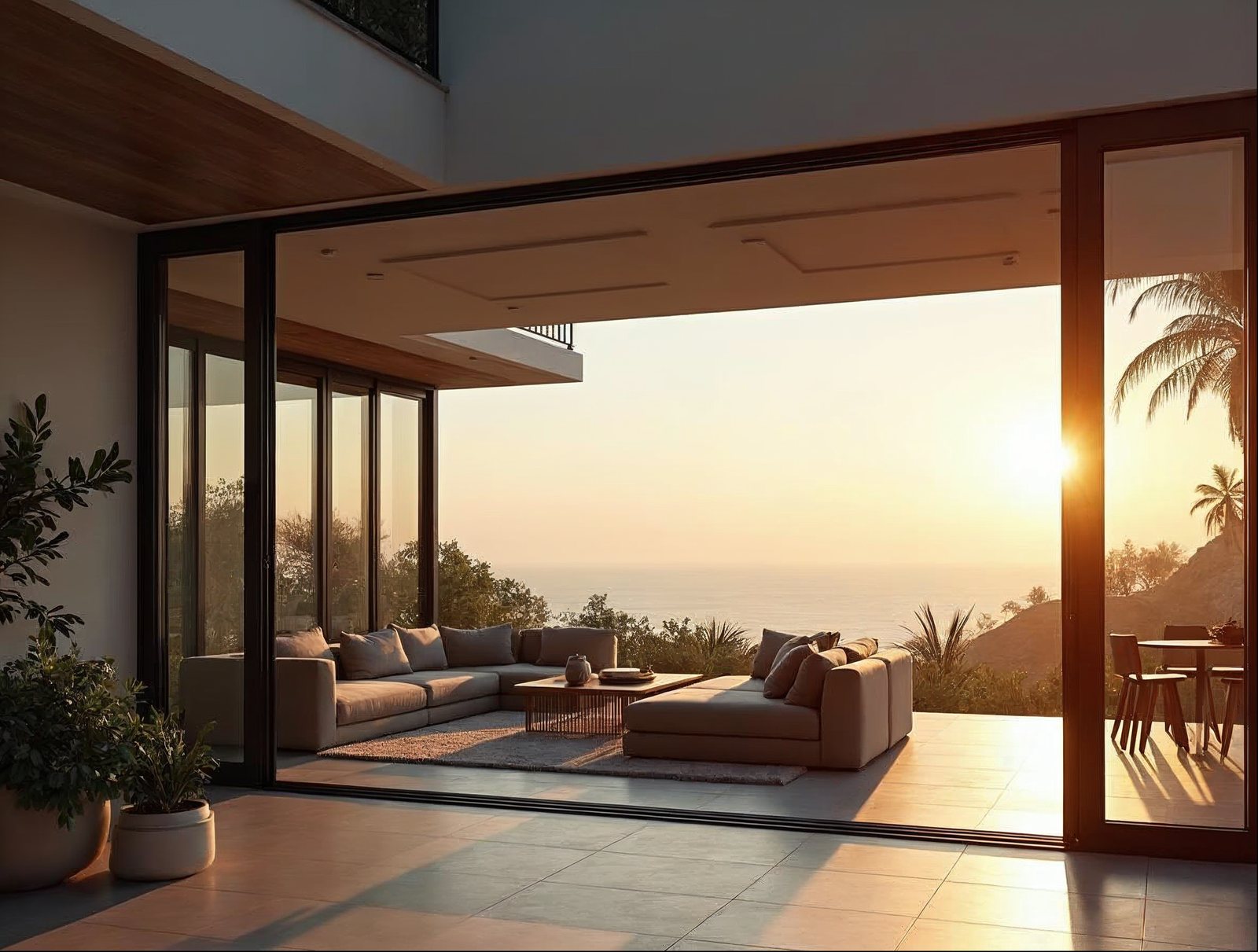
Are pocket sliding glass doors more expensive than standard multi-slide doors?
Yes — exterior pocket sliding glass doors cost approximately 15–30% more than a comparable standard multi-slide door system, primarily because of the additional track and pocket hardware required to fully conceal the panels inside the wall cavity. The table below breaks down how pocket sliders compare against standard multi-slide and traditional stacking slider configurations across the most relevant spec and cost dimensions.
| Specification | Gladiator Pocket Slider | Standard Multi-Slide (Lift & Slide) | Traditional Stacking Slider |
|---|---|---|---|
| Panel visibility when open | Fully hidden in wall pocket | Stacked beside opening | Stacked beside opening |
| Frame material | Thermal-break aluminum | Varies by system type | Varies by system type |
| Standard glass thickness | 6mm tempered | Typically 4–5mm | Typically 4mm |
| Wall-depth requirement | Pocket depth = panel width + 2–3 in | None (surface stack) | None (surface stack) |
| Relative system cost (same opening width) | 15–30% premium over multi-slide | Baseline | Lower — fewer hardware components |
| Clear opening achieved | 100% of rough opening | 50–75% of rough opening | 50–67% of rough opening |
| Header engineering required | Yes — engineered for span + pocket load | Standard structural header | Standard structural header |
| Factory-direct shipping | Yes — free nationwide | Yes — free nationwide | Yes — free nationwide |
| Lead time (custom) | 4–8 weeks typical | 3–6 weeks typical | 3–5 weeks typical |
| Warranty | 15 years | 15 years | 15 years |
The cost premium for a pocket system is almost always justifiable on architectural builds where the design intent requires a completely unobstructed opening. On production homes or projects where cost-per-door is the dominant constraint, a multi-slide sliding glass door delivers comparable visual impact at a lower price point.
What framing and wall-depth requirements do pocket sliding doors need?
Pocket sliding glass doors require a wall cavity deep enough to receive the full panel width when the door is open — this is the single most important rough-opening consideration builders must plan for before framing begins. A missed pocket dimension is one of the most common and costly field errors on sliding door projects.
Specific framing requirements to confirm during design development:
- Pocket depth: The wall cavity on each pocket side must equal the individual panel width plus a minimum of 2–3 inches of clearance for the track carrier and panel travel. For a 4-panel system where each panel is 36 in wide, each pocket must be at least 38–39 in deep.
- Wall thickness: Standard 2×6 framing (5.5 in actual) is the minimum for most residential pocket slider applications. Some high-end systems require 2×8 framing or a furred-out pocket wall. Confirm with Gladiator's technical team before framing.
- Header span and load: The header must carry the full span of the rough opening plus the pocket extensions on each side — this is a significantly wider structural span than a standard sliding door header. Engage your structural engineer of record early. Gladiator provides rough-opening drawings on every custom order.
- Low-profile track integration: Gladiator pocket sliders use a low-profile recessed floor track that sits near flush with the finish floor. Subfloor blocking and a clean transition to finish flooring must be detailed in the floor plan before slab is poured or subfloor is laid.
- Pocket wall finish and utilities: The pocket wall cannot contain plumbing, electrical runs, or HVAC ducts — route all MEP clear of the pocket zone. Coordinate with trades before rough-in.
- Rough opening tolerance: Gladiator provides project-specific rough opening dimensions with every order confirmation. Standard tolerance is ±¼ in on width and height.
Builders new to pocket sliding systems should request a pre-construction technical call with our team — we walk framing and sub-floor details before a single stud is set, at no charge for trade accounts.
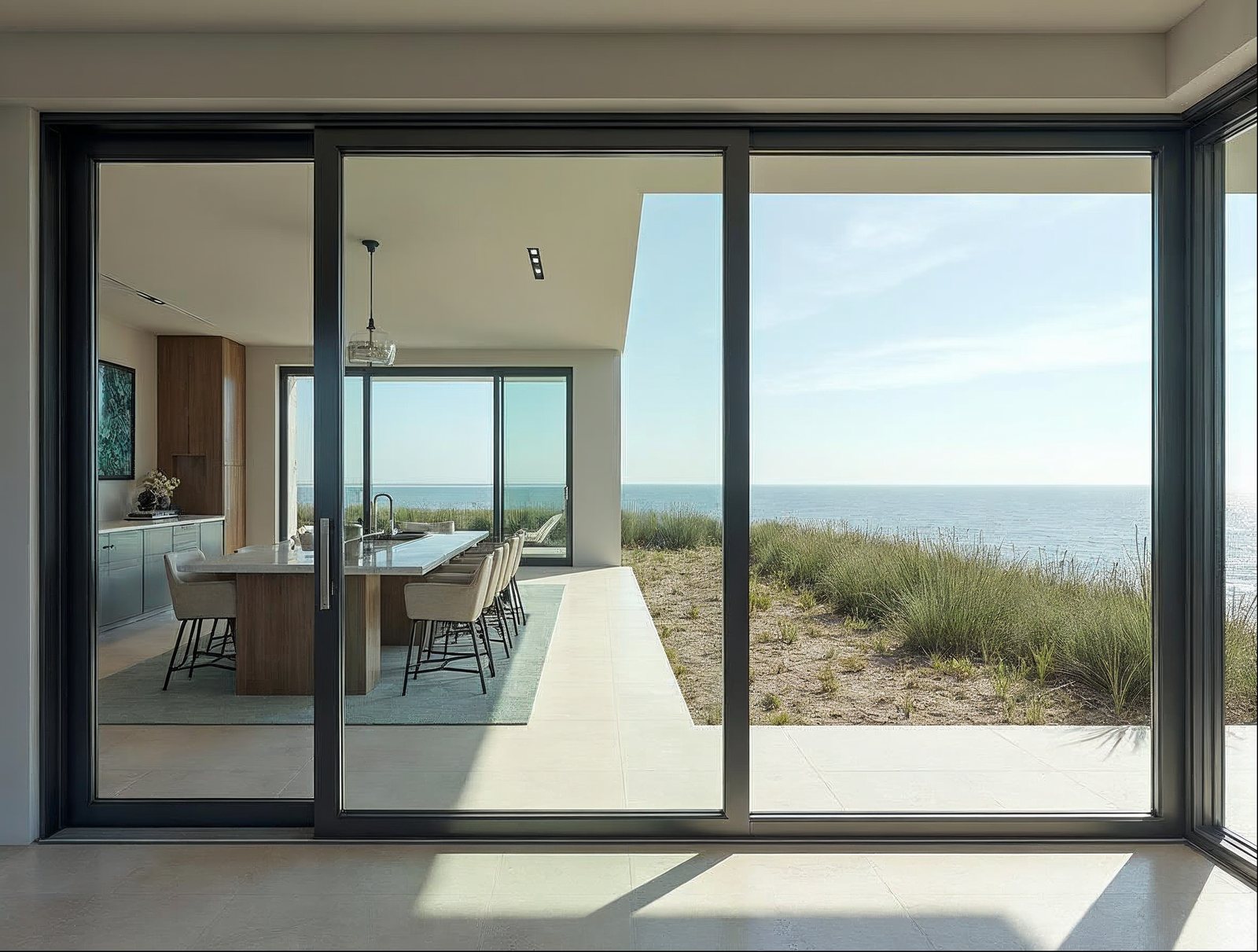
How does a pocket sliding door differ from a standard sliding or multi-slide door?
The defining difference is panel storage: a pocket sliding door conceals its panels entirely inside the wall when open, while a standard sliding or multi-slide door stacks the open panels beside the opening in a visible side stack. This single distinction has major implications for design, framing, cost, and the spatial experience the door delivers.
From a specification standpoint, both systems share the same fundamental aluminum frame technology — thermal-break aluminum extrusions, dual-pane insulated glass, multipoint locking hardware, and low-profile tracks. The distinction is purely in the pocket carrier system and the wall construction it requires. Consider our full range of sliding glass door configurations to match the right system to each project's design and budget.
A few additional performance distinctions worth noting:
- Clear opening: A pocket slider achieves a 100% clear opening — the entire rough opening becomes usable pass-through space. A multi-slide achieves 50–75% at best, because at least one panel always remains in the frame.
- Aesthetic: When open, a pocket system appears as a pure opening with no visible door — the wall is the frame. This is the primary reason architects specify pocket sliders on indoor-outdoor living spaces where visual continuity is paramount.
- Hardware complexity: Pocket systems include internal pocket carriers and precision top-hung or bottom-rolling hardware that must be accessed through a service panel if maintenance is required. This is a long-term maintenance consideration to disclose to clients.
- Energy performance: Both pocket and multi-slide Gladiator systems use thermal-break aluminum frames and are available with low-E dual-pane glass to meet whole-door U-factor and SHGC requirements for California Title 24 and equivalent energy codes in other states.
What are the best use cases for exterior pocket sliding glass doors on large openings?
Exterior pocket sliding glass doors perform best on architectural projects where a completely unobstructed indoor-outdoor connection is the primary design goal — particularly great rooms, primary suite walls, and covered living spaces spanning 12 to 32+ feet. Here are the strongest use cases builders and architects should consider:
- Great room to covered patio or pool deck: The most common application. A 4- or 6-panel pocket system spanning 16–24 ft eliminates the visual boundary between the living space and exterior entertaining area.
- Primary suite outdoor wall: A 2-panel pocket system at 8–12 ft creates a true open-wall connection to a private terrace without the side stack that a standard slider would leave in view.
- Covered outdoor living rooms: When paired with an aluminum pergola, a pocket sliding system defines a fully openable covered-outdoor room — functionally a third living space.
- Commercial hospitality and restaurant fronts: Bar walls, restaurant patio fronts, and hotel lobby-to-terrace transitions benefit from pocket systems because the fully open configuration reads as an open facade, not a door — critical for hospitality ambiance.
- ADU and multi-family outdoor access: On smaller floor plans where a stacking panel beside the opening would impede furniture layout, a pocket system recovers that side-wall space.
- High-design custom homes requiring full-width openings: When the rough opening spans the full structural bay and there is no wall space beside the opening for a panel stack, a pocket is the only technically viable solution.
For projects where the opening width is under 10 ft or where the wall framing is already set without a pocket cavity, a standard multi-slide or a bi-fold door system is typically a more cost-effective and equally high-performing solution.
How do contractors order and spec pocket sliding glass door systems?
The ordering process for exterior pocket sliding glass doors at Gladiator is designed specifically for trade buyers — contractors, builders, architects, and dealers — with a direct factory relationship that eliminates the dealer middleman and the delays that come with it.
Here is the step-by-step process most trade accounts follow:
- Apply for a trade account: Wholesale and reseller pricing, priority lead times, and dedicated technical support are all gated behind a trade account. Apply for a Reseller & Wholesale Account to get started — the application takes under five minutes and approval is typically same-day.
- Submit your rough opening and configuration: Provide the rough opening width and height, desired panel count, finish, glass package (clear, low-E, tinted), hardware spec, and any project-specific requirements. Our team generates a detailed quote and rough-opening drawing.
- Review the shop drawing and confirm: Every custom order includes a shop drawing for your sign-off before production begins. This is the moment to align with your framing crew, structural engineer, and flooring sub on pocket dimensions and track recessing.
- Production and lead time: Custom pocket sliding door systems run 4–8 weeks from confirmed order. In-stock standard sizes ship significantly faster — check in-stock doors ready to ship for availability on common configurations.
- Freight and delivery: Gladiator ships factory-direct, freight-included, to all 50 states. Curbside delivery is standard; inside delivery and liftgate options are available on request.
- Installation support: Trade account holders have access to our technical installation guides and a direct line to the factory technical team. We do not sell through a call-center — you get the people who built the door.
For specs and configuration options on our full sliding door lineup, visit the sliding glass door collection. For projects where a folding pass-through or bar window is also in scope, our folding passthrough windows can be specified on the same trade order.
Sell Gladiator doors at a wholesale price. Factory-direct aluminum sliding, bi-fold, and pivot doors — premium aluminum, 6mm glass, low-profile tracks, no upcharges, shipped nationwide. Contractors, builders, designers, and retailers get trade pricing and real support.
Apply for a Reseller & Wholesale Account · Call 904-822-1078


