


 904-822-1078

What is a multi-slide pocket patio door and how does it differ from a standard sliding glass door?
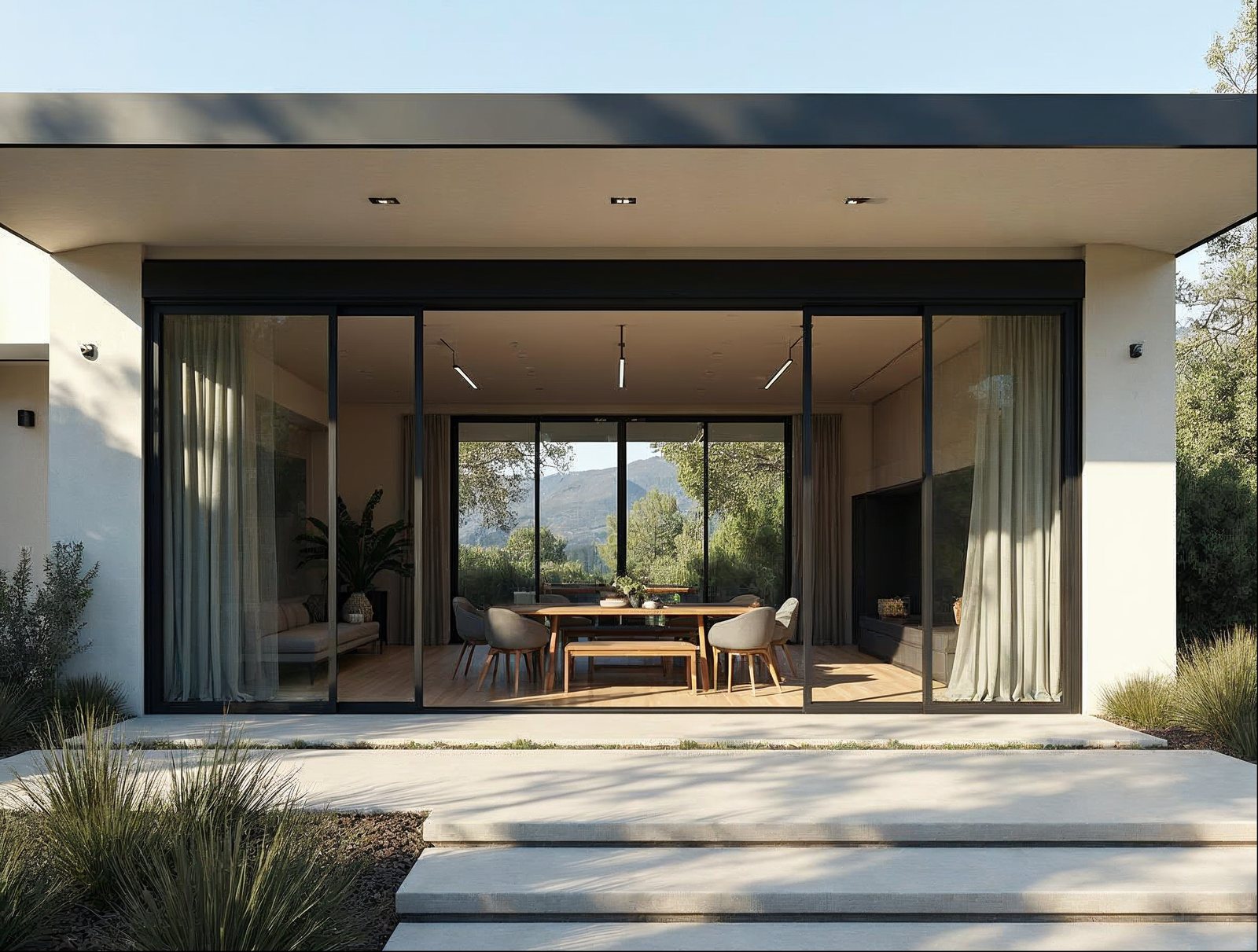
A multi-slide pocket patio door is a large-format sliding system in which two or more panels glide along parallel tracks and retract completely into a concealed wall cavity — called a pocket — so the entire opening is unobstructed when the door is fully open. A standard two-panel sliding glass door, by contrast, only ever frees half the opening because one panel always parks in front of the other. With a multi-slide pocket system, every panel disappears into the wall, giving you a seamless transition between interior and exterior space with zero visible panel stack.
The functional difference matters enormously at scale. On a 16-foot opening, a conventional slider leaves an 8-foot passage. A four-panel multi-slide pocket system on the same opening clears all 16 feet. For open-plan living rooms, great rooms, and covered outdoor entertaining areas, that distinction defines the architectural experience.
Key structural differences at a glance:
- Panel count: Multi-slide systems typically run 2–8 panels; standard sliders are almost always 2-panel.
- Clear opening: Pocket configuration = 100% clear; standard slider = ~50% clear.
- Wall pocket required: Yes for full pocket; "stacking" variants park panels to one or both sides without a pocket.
- Frame system: Premium multi-slide doors use thermal-break aluminum extrusions with a low-profile sill track — typically under 1 inch above finish floor — for a true flush threshold feel.
- Glass: Gladiator systems use 6 mm glass as standard, with dual-pane insulated units and optional low-e coatings for energy performance.
What are the largest sliding glass door sizes available for wide exterior openings?
Modern thermal-break aluminum multi-slide systems can span openings exceeding 32 feet wide and 10 feet tall, making them the most scalable option for wide exterior walls. Panel widths typically range from 3 feet to 6 feet per leaf, and systems are configured in 2-, 3-, 4-, 6-, or 8-panel arrangements to reach the total width required.
Gladiator's sliding glass doors are available in both standard stocking sizes — which ship faster because they are already manufactured — and fully custom configurations for non-standard rough openings. Standard sizes cover the most common residential and light-commercial spans, typically from 6 feet wide up through 16 feet wide. Beyond that, custom multi-panel systems are quoted per project.
Common size configurations for wide openings:
| Panel Count | Approximate Total Width | Typical Application |
|---|---|---|
| 2-panel | 6 ft – 12 ft | Standard patio, bedroom egress |
| 3-panel | 9 ft – 15 ft | Great room to covered patio |
| 4-panel | 12 ft – 20 ft | Open-plan living, pool decks |
| 6-panel | 18 ft – 28 ft | Indoor-outdoor entertaining walls |
| 8-panel | 24 ft – 32+ ft | Commercial, resort, luxury residential |
Panel height can reach 10 feet or more in custom configurations. Structural headers and rough opening preparation are the primary field constraints on maximum size — the door system itself is not the limiting factor.
How much do large multi-slide pocket patio doors cost compared to other large door systems?
Large multi-slide pocket patio doors generally range from $3,500 to $15,000+ for the door unit alone, depending on total width, panel count, glass package, and finish. Here is how that compares to other large-opening systems:
| System Type | Typical Unit Cost Range | Notes |
|---|---|---|
| Multi-slide pocket (aluminum) | $3,500 – $15,000+ | Scales with panel count; factory-direct pricing removes dealer markup |
| Bi-fold / accordion door (aluminum) | $4,500 – $18,000+ | Higher per-panel hardware cost; maximum clear opening |
| Wood-clad folding systems | $8,000 – $25,000+ | High maintenance; significant price premium over aluminum |
| Traditional two-panel slider | $1,200 – $4,500 | Lower cost; limited clear opening width |
| Pivot door (single oversized slab) | $3,000 – $12,000+ | Entry-focused; not suited to wide patio openings |
Because Gladiator manufactures and ships factory-direct — with no dealer network or showroom markup — our multi-slide pricing sits meaningfully below what you would pay for equivalent aluminum specs through a traditional distribution channel. Standard in-stock units priced for fast delivery can represent especially strong value. Browse in-stock doors ready to ship for current availability and pricing.
Cost drivers within the multi-slide category include:
- Total width and panel count — the single biggest variable.
- Glass package — dual-pane with low-e coatings adds cost but reduces long-term energy spend; relevant to California Title 24 compliance and similar energy codes.
- Finish — standard matte black or white are typically the most economical; custom RAL colors or bronze anodized add a finish upcharge.
- Pocket vs. stacking configuration — true wall-pocket systems require additional framing work in the field but deliver a cleaner aesthetic.
- Hardware — flush-mount multipoint locks and integrated handles versus standard hardware.
How much does it cost to install a large sliding glass door, and what affects that price?
Professional installation of a large multi-slide pocket patio door typically costs $800 to $3,500 in labor, separate from the door unit itself, with wide variation based on project complexity. A straightforward replacement into an existing rough opening on the low end; a new structural opening with header work and pocket framing on the high end.
The factors that most significantly affect installation cost:
- New opening vs. replacement: Cutting a new exterior opening requires a licensed contractor to install a structural header. This alone can add $1,000–$2,500 in framing and structural work before the door is even touched.
- Wall pocket framing: A true pocket configuration requires building parallel stud walls to house the retracted panels. This is a meaningful labor addition versus a simple stacking configuration.
- Sill and threshold work: Achieving a flush or near-flush threshold — critical for the aesthetic of a large slider — requires precise subfloor preparation and often coordination with flooring installers.
- Panel size and weight: Larger panels require multiple installers and sometimes mechanical lifting assistance. A 6-foot × 10-foot glass panel can exceed 200 lbs.
- Region and labor market: Installation labor rates vary considerably by geography across the 50 states.
- Flashing and weatherproofing: Proper integration with the building envelope — including sill pan flashing, jamb tape, and sealant — is non-negotiable and adds time.
Always budget total installed cost — unit + delivery + installation labor + any structural work — before comparing system prices. A lower-priced unit that requires more complex installation may not be the better financial choice.
What is a zero-corner sliding glass door system and what does it cost?
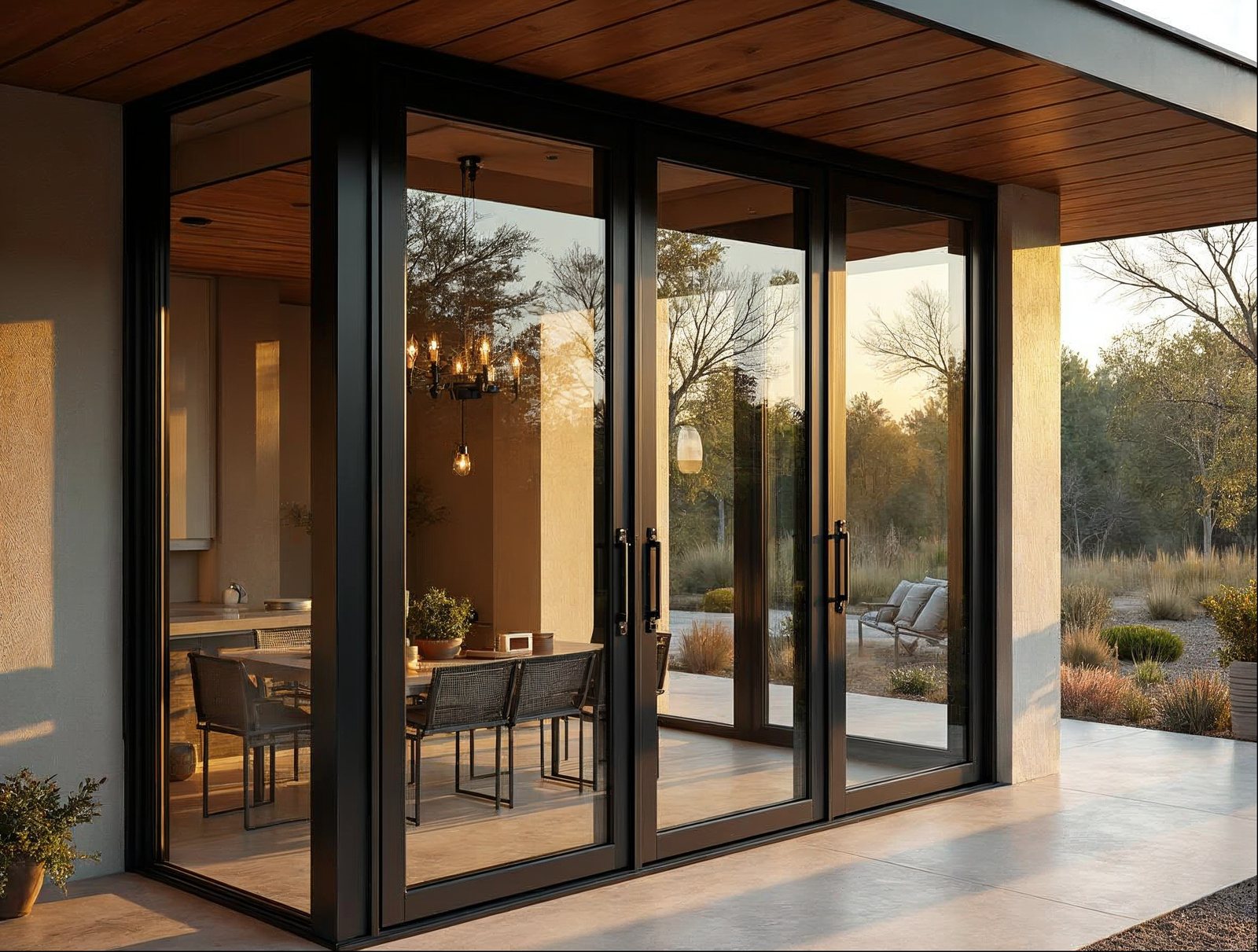
A zero-corner sliding glass door system — sometimes called a "corner pocket" or "disappearing corner" configuration — uses two multi-slide door runs that meet at a structural corner, with no fixed corner post between them. When both runs are fully open, the entire corner of the room dissolves, creating an uninterrupted 270-degree-style connection to the outdoors. It is one of the most dramatic architectural features available in residential construction today.
The engineering requires a cantilevered or steel-reinforced corner detail so the structure above the opening is supported without a traditional corner column. This adds structural complexity and cost but is achievable in both new construction and major renovation projects.
Zero-corner systems command a significant premium over standard multi-slide configurations:
- Door units alone: $12,000 – $35,000+ depending on total glass area across both runs.
- Structural and framing work: $3,000 – $10,000+ in most markets, depending on span and existing construction type.
- Total installed cost: $18,000 – $50,000+ for luxury residential projects.
For buyers interested in this configuration, early coordination with a structural engineer is essential — the door specification and the structural solution need to be designed together, not sequentially.
Large sliding glass doors vs. bi-fold doors: which is the better choice for a wide patio opening?
For most wide patio openings, multi-slide pocket doors deliver a cleaner everyday experience, while bi-fold doors maximize clear opening and create a more dramatic fully-open aesthetic — the right choice depends on how you use the space day-to-day.
Here is how the two systems compare across the factors that matter most to buyers:
| Factor | Multi-Slide Pocket Door | Bi-Fold / Accordion Door |
|---|---|---|
| Clear opening | 100% with pocket; ~85% with stacking | Up to 95%+ of rough opening |
| Operation effort | Very light; panels glide on rollers | Moderate; panels fold and stack |
| Daily usability | Excellent — open/close quickly | Best for fully-open entertaining events |
| Low-profile sill | Yes — typically under 1 inch | Yes — similar low-sill options available |
| Panel stack space | Requires wall pocket or side stack space | Panels fold into a compact stack at one end |
| Energy performance | Excellent with thermal-break frames and low-e glass | Excellent with same spec |
| Cost (unit) | Generally lower per square foot of glass | Generally higher due to folding hardware per panel |
| Aesthetic | Minimal sightlines when closed; invisible when open | Dramatic accordion fold; bold architectural statement |
Choose multi-slide pocket doors if you want a system that operates effortlessly every day, disappears completely when open, and fits a modern minimal aesthetic. They are especially well-suited to wide openings where a wall pocket can be built into the design.
Choose bi-fold doors if the fully-open, indoor-outdoor entertaining experience is the primary goal, wall pocket space is unavailable, or the folding architectural form is part of the design intent. Explore Gladiator's bi-fold door collection to compare panel configurations and glass options side by side.
For openings that include a kitchen or bar counter with pass-through service to an outdoor area, consider pairing a large slider with folding passthrough windows — a combination that handles both the pedestrian opening and the counter-height service window in one cohesive design language.
If your project also includes a covered outdoor structure, Gladiator's aluminum pergolas are designed to pair architecturally with our door systems — same aluminum profiles, same finish palette, same factory-direct value.
Ready to spec your project? Browse our full sliding glass door collection or check in-stock inventory for units that ship without the custom lead time. Builders and architects can also apply for our reseller and wholesale program for project pricing.


