


 904-822-1078

Are aluminum sliding doors better than vinyl for wide patio openings?
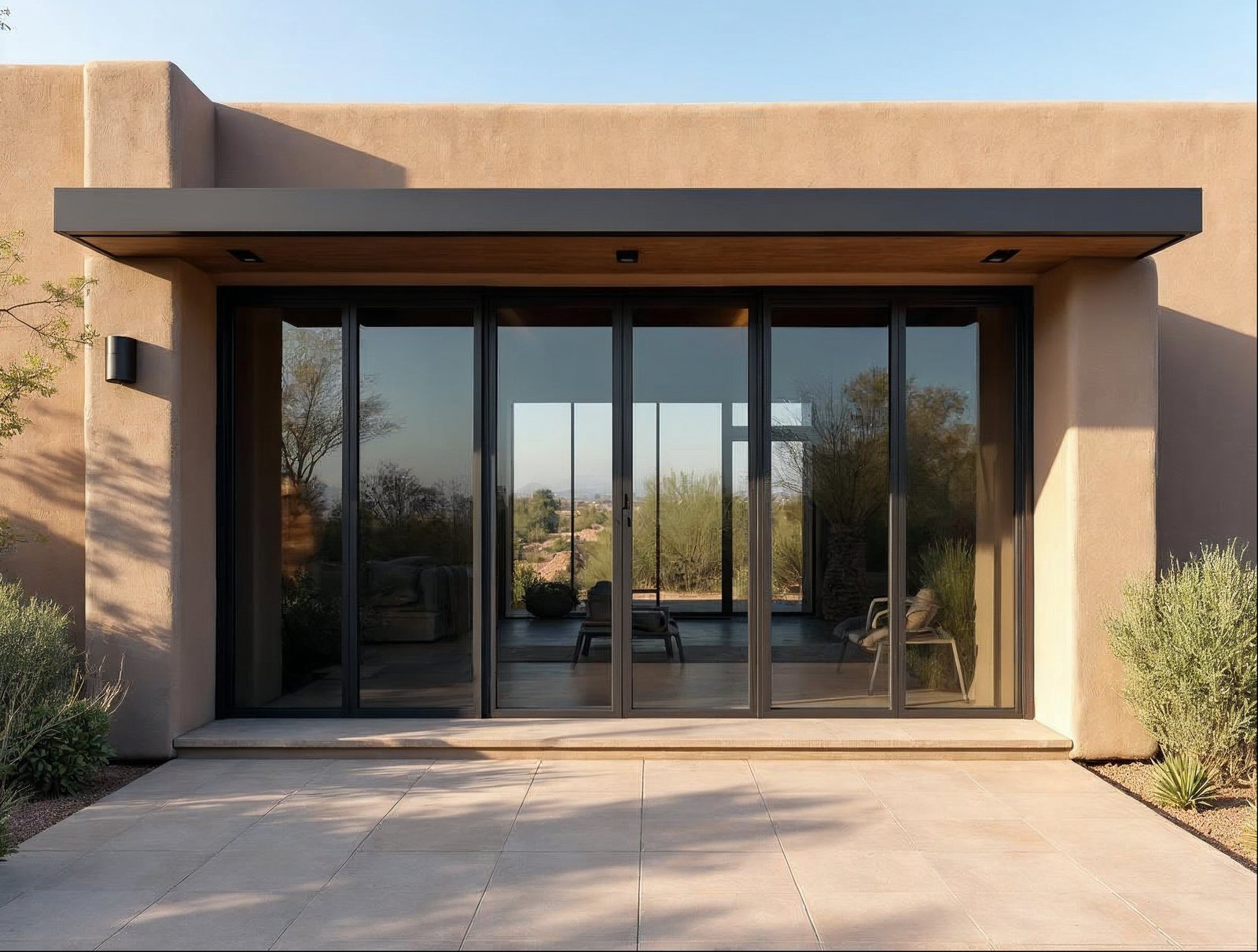
For wide patio openings — anything beyond a standard 8-foot span — aluminum sliding glass doors are the stronger choice. Aluminum's high strength-to-weight ratio allows slender frames to carry large glass panels without deflecting or bowing, something vinyl profiles simply cannot do at scale. If your opening is 12, 16, or 20 feet wide, aluminum is not just better; for most architectural applications it is the only practical option.
That said, vinyl does have a legitimate place in the market. For standard two-panel configurations under 8 feet wide in a budget-conscious build, vinyl can deliver adequate performance. The gap between the two materials widens — dramatically — as the opening gets larger, the glass gets heavier, and the design expectations get higher.
This guide walks through every real difference so you can make a confident decision for your specific project.
What are the real differences between aluminum and vinyl large sliding glass doors?
The fundamental difference is structural: aluminum is a metal alloy, vinyl (PVC) is a plastic polymer — and that distinction drives every downstream spec. Here is how they compare across the factors that matter most for large exterior openings.
Frame Strength and Profile Width
Aluminum frames can be extruded into thin, precise profiles — often as narrow as 1.5 to 2 inches — while still carrying panels that weigh hundreds of pounds. Vinyl achieves structural rigidity through bulk: thicker, chunkier frames with internal steel or aluminum reinforcement in many premium products. The result is that vinyl frames consume more of your view, while aluminum maximizes the glass-to-frame ratio architects and designers prize.
Glass Capacity
Gladiator's aluminum sliding systems are engineered to accept 6 mm tempered or low-e glass as standard, with dual-pane insulated glass units (IGUs) available for energy performance. Because the aluminum frame is structurally robust, individual panels can span floor-to-ceiling heights of 10 feet or more. Vinyl systems typically cap out at smaller individual panel sizes before reinforcement becomes impractical and the frame starts to look institutional rather than architectural.
Thermal Performance
This is where vinyl has historically had an edge: PVC is a poor conductor of heat and cold, so a vinyl frame is naturally insulating. Aluminum conducts heat readily, which is why a non-thermally-broken aluminum frame can experience condensation and energy loss. The key distinction is thermal-break aluminum. A thermally broken aluminum frame — standard in Gladiator's sliding door systems — inserts a continuous polyamide barrier between the interior and exterior aluminum sections, disrupting the conductive pathway. The result is energy performance that is competitive with vinyl while retaining all of aluminum's structural advantages. When comparing materials, always verify whether an aluminum system is thermally broken; non-thermally-broken aluminum is an older design that should be disqualified for most residential and commercial projects.
Tolerances and Fit Over Time
Vinyl expands and contracts significantly with temperature swings — roughly twice the thermal movement coefficient of aluminum. In climates with hot summers and cold winters, this movement can cause vinyl frames to warp slightly, seals to degrade faster, and hardware alignment to drift. Aluminum's dimensional stability means the frame holds its geometry season after season, keeping the sliding panel tracking smoothly and the weather seals seated correctly.
Aesthetic Range
Aluminum can be powder-coated in virtually any RAL color and holds that finish for decades. Vinyl is available in a narrower palette, and because the color is integrated into the material rather than applied as a surface coating, the finish options are more limited and the appearance is less precisely controlled. For modern, minimalist, or architecturally driven projects, aluminum's finish flexibility is a significant advantage.
Are aluminum sliding doors more durable than vinyl over the long term?
Yes — aluminum sliding doors consistently outperform vinyl over a 20-plus-year lifespan, particularly in demanding environments. Aluminum does not warp, crack, or become brittle with UV exposure. It will not swell from moisture or shrink in cold snaps. The structural profile you install on day one is effectively the same profile you have on year twenty.
Vinyl, by contrast, is susceptible to UV degradation over time. High-quality vinyl formulations include UV stabilizers that slow this process, but prolonged sun exposure in warm climates can cause discoloration and surface chalking in older or lower-grade products. In very cold climates, vinyl can become brittle at the edges, increasing the risk of cracking under mechanical stress.
Hardware longevity also favors aluminum. Because the aluminum frame holds its shape precisely, the multi-point locking hardware, rollers, and track alignment stay calibrated longer. When a vinyl frame warps even slightly, it can put lateral stress on hardware components and accelerate wear.
Gladiator's aluminum sliding doors carry a 15-year warranty, reflecting the confidence that comes with an engineered metal system built for the long term.
Which material holds up better for oversized sliding glass door systems?
Aluminum is the clear choice for oversized sliding glass door systems — there is no meaningful contest at large scale. Here is why the gap grows as the opening gets bigger.
- Span capability: Aluminum multi-slide systems can achieve continuous openings of 20, 30, or even 40 feet by stacking multiple panels into a pocket or along a wall. Each panel in a large aluminum system can be 4 to 6 feet wide and 10 or more feet tall while remaining structurally sound. Vinyl systems at equivalent scale require heavy internal reinforcement that adds weight, increases frame bulk, and often requires additional structural support that complicates installation.
- Panel weight management: Larger panels mean heavier glass. Aluminum frames are engineered to work with precision-machined stainless steel rollers riding on a low-profile track, distributing panel weight efficiently. The smooth operation you experience on a 10-foot panel in an aluminum system is very difficult to replicate in vinyl at that scale.
- Sightline consistency: On a 20-foot opening with five or six panels, the vertical frame members (stiles) between panels add up. In aluminum, those stiles can be kept to 2 inches or less. In vinyl, each stile is thicker, and the cumulative visual interruption across a large opening is significantly greater.
- Architectural integration: Oversized openings are most common in higher-end residential and commercial projects where the door system is a primary design element. Aluminum's precision, finish options, and sightline control align with the expectations of architects and designers specifying these systems.
If you are planning a large-format opening, explore Gladiator's sliding glass door systems, which are configured for multi-panel applications and sized for real architectural openings. Standard sizes ship from in-stock inventory — check in-stock doors ready to ship for the fastest lead times.
For the widest possible openings where panels fold completely away, bi-fold door systems are worth considering alongside multi-slide configurations — both are available in aluminum and both serve large architectural openings.
Is the price difference between aluminum and vinyl sliding doors worth it?
For most buyers considering large exterior openings, yes — the price difference is worth it, and here is the honest breakdown of why.
Upfront Cost
Vinyl sliding doors are generally less expensive at the point of purchase, particularly in standard sizes. The cost gap is real. For a basic 6-foot two-panel slider in a tract home, vinyl may be entirely appropriate. But as you move into the 10-foot, 12-foot, and larger configurations, the price difference narrows because reinforced vinyl at large scale is not cheap, while aluminum scales efficiently.
Total Cost of Ownership
When you factor in longevity, maintenance, and hardware replacement over a 20-year horizon, aluminum frequently delivers a lower total cost. Vinyl systems may require hardware recalibration, seal replacement, or full-frame replacement sooner — particularly in climates with extreme temperature variation. Aluminum's dimensional stability reduces the frequency of these interventions.
Factory-Direct Pricing
The price comparison is also shaped by how you buy. Gladiator sells factory-direct with no dealer markup, which compresses the price gap between aluminum and vinyl substantially. The aluminum system you price through a traditional dealer network — where a distributor margin and a retailer margin are both built in — is a materially different cost conversation than the same quality aluminum system purchased direct. Free nationwide shipping is included, eliminating a cost that can add hundreds to thousands of dollars when buying through conventional channels.
Resale and Design Value
Aluminum large-format sliding doors are a recognized premium feature in real estate. The visual impact of floor-to-ceiling glass in slim aluminum frames, sliding back to create a seamless indoor-outdoor connection, is a compelling selling point. That perceived value is harder to replicate with vinyl systems, particularly in architecturally driven markets.
For projects where both a sliding door and a complementary pass-through are on the plan, also look at folding passthrough windows — another aluminum system that extends the indoor-outdoor connection to kitchen and bar areas without a full door opening.
Bottom Line
If your opening is under 8 feet and budget is the primary driver, vinyl is a defensible choice. If your opening is 10 feet or wider, if the design calls for clean sightlines and generous glass, or if you are building for the long term, aluminum is worth the investment — and factory-direct pricing makes that investment more accessible than it has traditionally been.
Ready to spec your opening? Browse Gladiator's aluminum sliding glass door systems or view in-stock sizes available for fast shipping. Builders and architects working on multiple projects can apply for wholesale and reseller pricing here.


