


 904-822-1078

Do large sliding glass doors come with screens included, or are they add-ons?
Screens are almost always a separate add-on for large sliding glass doors — not included in the base panel system. Most premium aluminum sliding door systems are designed around the glass and frame assembly first, with screen compatibility engineered as a modular option. This matters at the specification stage: if you know you want a screen, select it alongside the door configuration rather than retrofitting later. At Gladiator, screens are quoted as part of the door order so everything is sized, tracked, and finished to match from the factory.
The practical reason screens are sold separately is flexibility. Not every application needs one — a covered lanai, a high-rise balcony, or an interior partition wall doesn't require insect screening. Building screens into every unit would raise costs across the board for buyers who don't need them. Specifying a screen as an add-on keeps the base price honest and lets you choose the right screen type for your climate, opening width, and usage pattern.
What types of screens are available for large sliding and multi-slide patio doors?
The three most practical screen types for large sliding and multi-slide patio doors are sliding panel screens, retractable roll-up screens, and pleated retractable screens — each with different trade-offs in durability, aesthetics, and cost.
- Sliding panel screens: The most common option for multi-slide doors. A framed screen panel runs in a dedicated track at the outer edge of the door system. On a wide opening, multiple screen panels can be stacked just like the glass panels. These are robust, easy to clean, and can span large widths reliably. They do occupy a small amount of track space when open.
- Retractable roll-up screens: The screen coils into a slim cassette mounted to the door frame when not in use, making it essentially invisible. Ideal when aesthetics are a priority — no screen panel obstructs the view from inside. Best suited for openings up to around 16–20 feet wide per cassette unit; very wide openings may require multiple cassette units side by side.
- Pleated retractable screens: A pleated fabric screen that folds accordion-style into a narrow housing. Offers a clean look similar to a roll-up but uses a different tensioning mechanism. Popular in architectural projects where the screen housing needs to sit flush with the frame profile.
Screen mesh choices include standard fiberglass (most affordable, good visibility), solar/sun screen mesh (reduces glare and heat gain without blocking airflow), and no-see-um mesh (very fine weave for environments with small insects). Gladiator matches screen frame finish to your door finish — matte black, dark grey RAL 7016, white RAL 9010, or bronze anodized — so the system looks intentional, not afterthought.
How wide can a sliding glass door with a screen be for a patio opening?
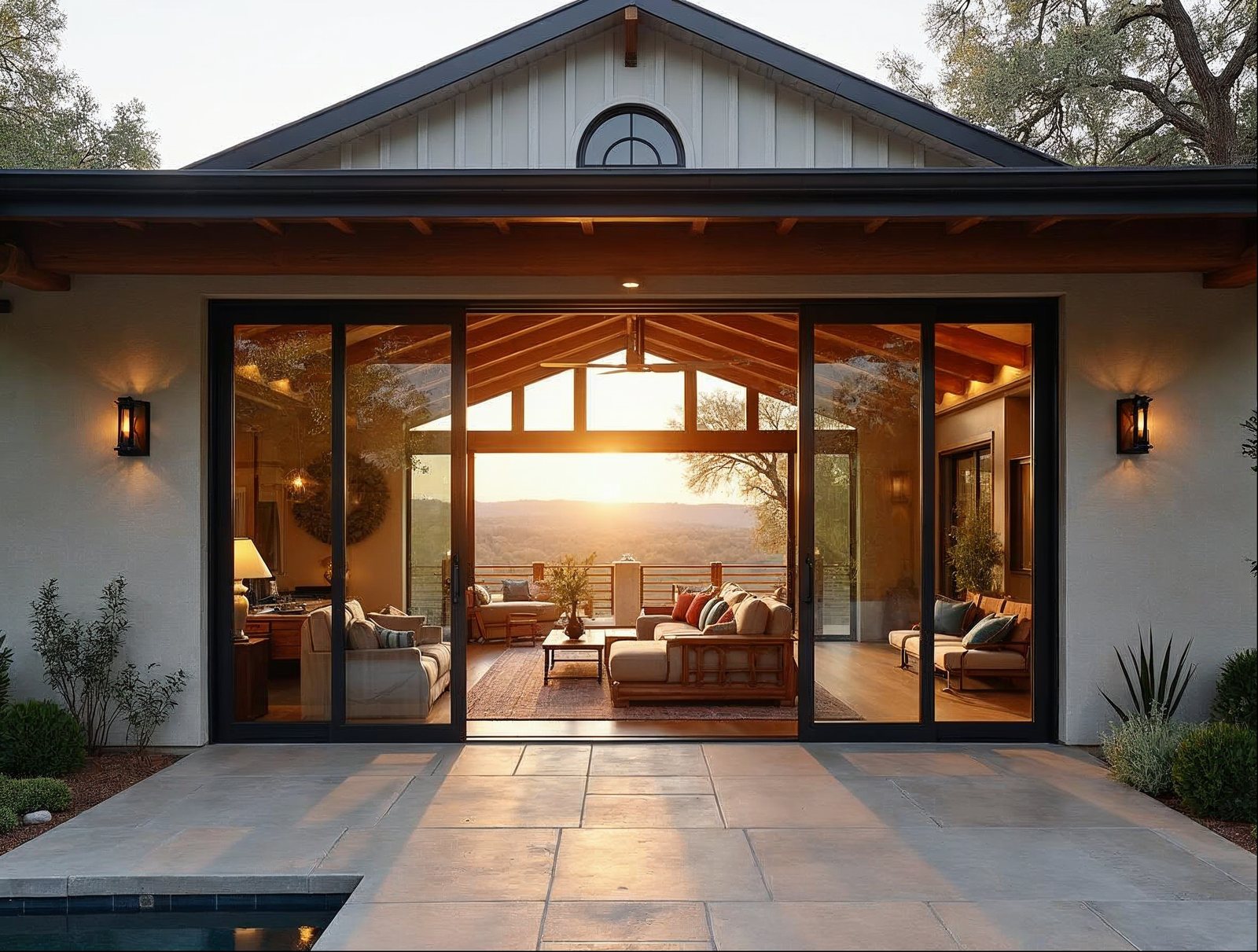
Gladiator's aluminum multi-slide systems can accommodate total opening widths from roughly 6 feet up to 40+ feet when multiple panels are combined, and screens can be configured to cover the full opening at those widths. Single sliding panel screens typically max out around 36–40 inches per panel; for wider doors, multiple screen panels stack alongside the glass panels in a shared or dedicated outer track.
For very wide openings — say, a 24-foot or 32-foot multi-slide wall — a two- or three-panel screen stack is the most reliable solution. Roll-up retractable screens can cover single spans up to approximately 16–20 feet per cassette; beyond that, two cassettes meet in the center for a clean split. The key specification to confirm early is whether the door's track system includes a dedicated screen track (fourth track) or whether the screen shares track space with the outermost glass panel. Gladiator's wider multi-slide configurations include a dedicated screen track as standard so the screen operates independently of the glass stack.
Panel count and total width combinations that are most popular for screened patio openings:
| Panel Count | Approximate Total Width | Recommended Screen Type |
|---|---|---|
| 2-panel | 8–12 ft | Single sliding screen or roll-up |
| 3-panel | 12–18 ft | Single or dual sliding screen panels |
| 4-panel | 16–24 ft | Dual sliding screen panels |
| 6-panel | 24–36 ft | Multi-panel screen stack or dual roll-up cassettes |
| 8-panel | 32–48 ft | Multi-panel screen stack |
Explore the full configuration range in our sliding glass door collection to see panel count and width options.
Are retractable screens an option for large exterior sliding glass doors?
Yes — retractable screens are a fully viable option for large exterior sliding glass doors, and they are the preferred choice when view preservation is the top priority. When the screen is rolled or pleated away into its cassette housing, the opening looks exactly like an unscreened glass wall. For architectural and high-end residential projects, this is often worth the premium over a fixed sliding panel screen.
The practical limitations are width and durability. A single roll-up cassette is most reliable at spans under 20 feet. Wider openings pair two cassettes that meet at the center — a common detail in large outdoor living rooms and covered patios. Pleated screens handle slightly wider single spans because the pleat structure provides lateral stability the roll coil lacks. In either case, retractable screens are more susceptible to wind movement than a tracked sliding panel screen, so they are best deployed on covered patios, screened porches, or protected outdoor rooms rather than fully exposed elevations in high-wind regions.
If you're also considering a folding door system for another opening in the same project, note that bi-fold doors have their own compatible screen solutions — including full-width retractable options — so the same screening strategy can carry across multiple openings in a home.
What is the cost difference between a large sliding door with and without a screen?
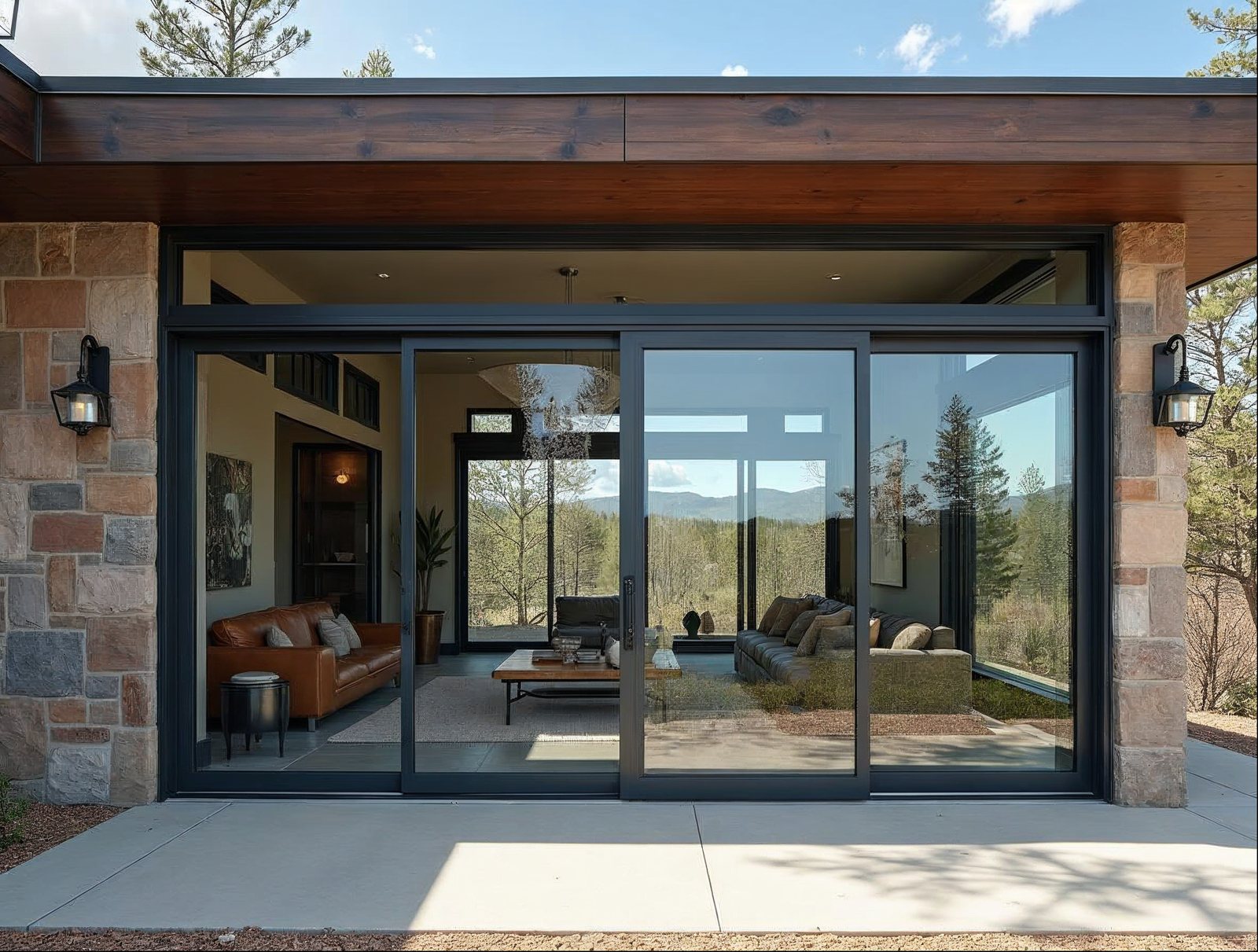
For most large sliding glass door configurations, adding a screen increases the total door system cost by roughly 8–15%, depending on screen type and opening width. Sliding panel screens are the most economical add-on; retractable roll-up and pleated screens cost more due to their cassette mechanisms and precision hardware.
Here is a general cost-impact framework (actual pricing varies by configuration):
- No screen: Base system price. Fine for covered, enclosed, or interior applications.
- Sliding panel screen: Lowest add-on cost. Typically adds 5–10% to the base system price. Best value for utility-first buyers.
- Retractable roll-up screen: Moderate premium. Typically adds 10–15% depending on cassette count needed for the span. Justified by improved aesthetics and view quality.
- Pleated retractable screen: Similar to roll-up pricing; may be slightly higher on very wide spans. Best for architectural flush-frame applications.
Because Gladiator is a factory-direct manufacturer with no dealer markup, the screen add-on pricing reflects actual component cost — not a retailer margin stacked on top of a distributor margin. That structure typically puts a Gladiator screened system well below what an equivalent dealer-network brand would quote for the same configuration. For projects with multiple openings, ask about volume pricing through our reseller and wholesale program.
Energy-efficiency note: solar mesh screens reduce solar heat gain through the glass, which can meaningfully support thermal performance goals — relevant if your project needs to meet California Title 24 energy compliance or similar state energy codes. This is a functional benefit of the screen beyond insect control that is worth factoring into the cost comparison.
Can I get a large sliding patio door with a screen that ships quickly in a standard size?
Yes — Gladiator keeps a selection of standard-size sliding door configurations in stock that ship significantly faster than made-to-order custom sizes. If your rough opening matches a stocked configuration, you can skip the full production lead time and get your door much sooner. Check our doors ready to ship now page for current available sizes, finishes, and configurations.
Standard stocked sizes are typically the most popular panel counts and widths — common patio opening dimensions like 8-foot, 10-foot, and 12-foot widths in 2- and 3-panel configurations. Screen compatibility for in-stock units follows the same add-on model: select the screen type at checkout and it ships as part of the same factory order, already sized and finished to match.
A few things to confirm before ordering from in-stock inventory:
- Rough opening dimensions: Measure width and height carefully. In-stock units are fixed sizes; field trimming aluminum frames is not recommended.
- Stack direction: Confirm whether your layout requires panels to stack left or right, and that the in-stock unit matches your preference.
- Screen track: Verify that the in-stock configuration includes the screen track if you are adding a screen — most do, but confirm at order time.
- Finish: In-stock units are available in specific finishes; if you need a less common finish, a custom order may be required.
If your opening is non-standard or you need a specific configuration not currently in stock, custom production is available — lead times are quoted at order. Browse the full range of available in-stock configurations and see what's in stock and ready to ship today.
Ready to spec your large sliding glass door with the right screen for your patio opening? Explore Gladiator sliding glass doors and configure your system, or reach out to our team for a quote on a custom width or multi-opening project.


